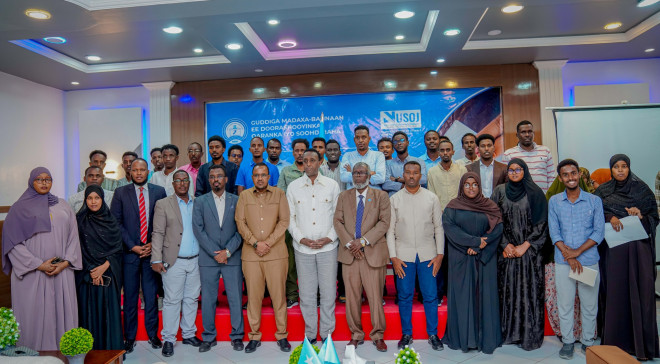
Somalia Records 72 Media Freedom Violations in 2025, Including One Journalist Killing
-
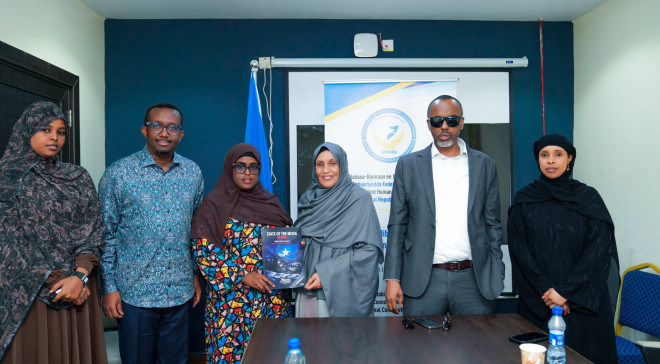
 NUSOJ Report
- Posted On 21-04-2026, 08:12AM
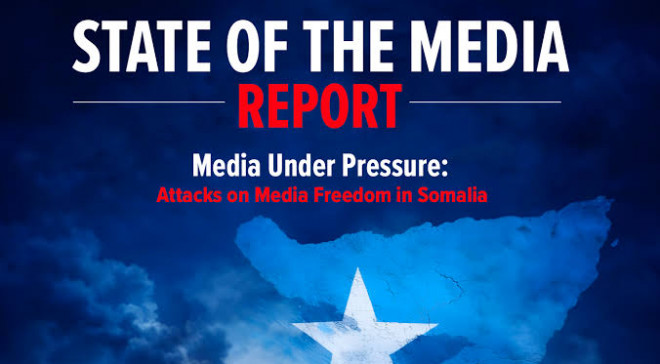
The National Union of Somali Journalists (NUSOJ) has today released its flagship State of the Media Report, exposing a media environment under sustained attack where journalists and news media organisations are routinely targeted and those responsible act with total impunity. The report documents 72 media freedom violations between 1 January and 31 December 2025, confirming that repression of journalism in Somalia remains widespread, systematic and deeply entrenched.
Of the total cases recorded, 70 involved individual journalists, while 2 targeted media houses, demonstrating that both journalists and media institutions are under direct and sustained pressure. The report also confirms that one journalist, Mohamed Abukar Mohamed (Dabaashe), was killed in 2025, underscoring that journalism in Somalia remains a profession where the risks are real and can be fatal.
The findings reveal a clear and alarming pattern of repression concentrated in key regions. The Banadir region alone accounts for 39 out of 72 cases, representing 54.2% of all violations, followed by Somaliland with 31.9%, with the remaining cases spread across Puntland, Galmudug, Jubaland and Southwest. Violations surged during sensitive periods, with May accounting for 20.8% and September 15.3% of all cases, highlighting the direct link between attacks and critical reporting.
The report documents a wide range of violations, including arbitrary arrests, intimidation and threats, physical violence, obstruction of reporting, legal harassment and targeted retaliation. These attacks were not random. They were directly triggered by reporting on corruption, land evictions, political disputes, security operations and engagement with opposition voices, pointing to a deliberate effort to silence scrutiny, suppress uncomfortable truths and control information.
A central and deeply disturbing finding is the role of security forces. Accounting for 54.2% of all documented violations, Banadir Regional Police have emerged as the leading perpetrators and the single greatest predator of press freedom in Somalia. Across the country, police forces are repeatedly identified as responsible for attacks on journalists. Despite this, not a single police officer or security official has been held accountable, reinforcing a culture of impunity that continues to fuel violations.
The report further exposes the harsh and exploitative conditions under which journalists operate. Many earn less than US$100 per month, with some receiving as little as US$20 to US$50 and others working without any pay at all. The absence of written contracts, protections and basic rights leaves journalists vulnerable to coercion and external influence, undermining editorial independence and weakening the quality and ethics of journalism.
Women journalists face even greater risks. The report documents 29 cases of sexual and gender-based violence, with 58.6% occurring in newsrooms and 41.4% online. These violations, often perpetrated by colleagues, authorities and public actors, are designed to intimidate, silence and push women out of the profession, limiting diversity and weakening public discourse.
The legal framework continues to be used as a tool of repression. The continued reliance on the 1964 Penal Code by all administrations in Somalia, alongside restrictive provisions in the Media Law of 2020 and the broad application of the Anti-Terrorism Law, has contributed to the criminalisation of journalism and the suppression of reporting, particularly on governance and security issues.
NUSOJ warns that the consequences of these violations extend far beyond the media industry. By undermining transparency, accountability and access to information, attacks on media freedom are weakening the foundations of democratic governance and making Somalia’s progress towards the realisation of Sustainable Development Goals (SDGs) increasingly difficult to achieve.
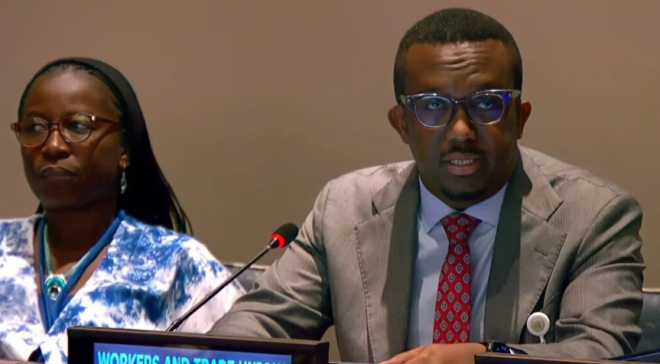
NUSOJ Secretary General Omar Faruk Osman stated, “This report reveals a harsh truth: media freedom in Somalia is under constant assault and those responsible continue to act without consequence, making impunity the greatest enemy to media freedom in this country.” “The killing of a journalist in 2025 is a clear reminder that the risks are real and can be fatal. When more than half of all violations are attributed to a single police force and no one is held accountable, it sends a dangerous message that attacks on journalists are tolerated. Ending impunity is not optional. It is the only way to protect journalism and defend the public’s right to information.”
NUSOJ calls for immediate and decisive action. This includes ending impunity through credible investigations and the prosecution of all perpetrators; reforming draconian laws that criminalise journalism; improving working conditions for journalists; and fully implementing the National Action Plan on the Safety of Journalists adopted in 2022. Without urgent and sustained action, the continued erosion of media freedom will have serious consequences for the transition to democracy, accountability and the future of peaceful Somalia, where just rules of law prevail.