What Is Behind the Coordinated Defence of Somalia–Turkey Relations?
-
 GAROWE ONLINE
- Posted On 12-09-2026, 04:13PM
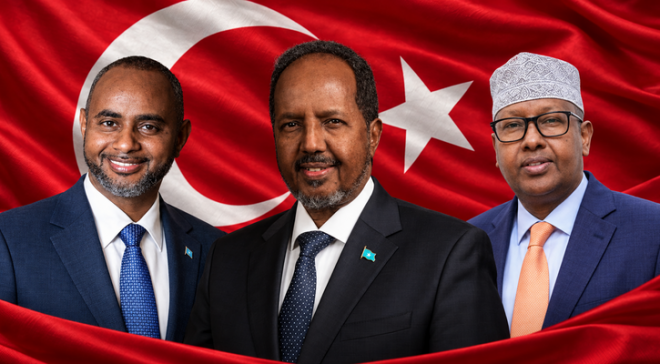
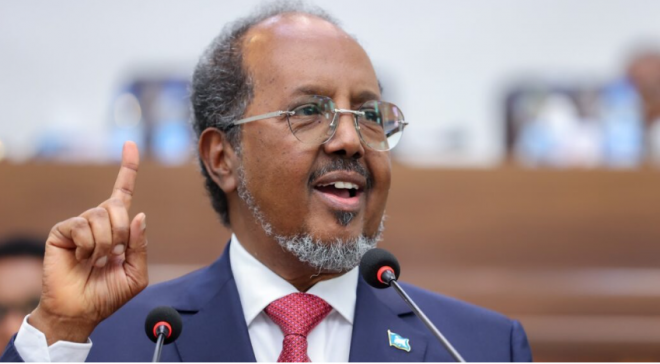
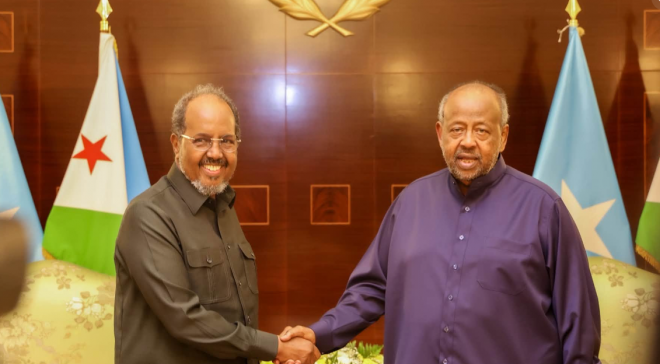
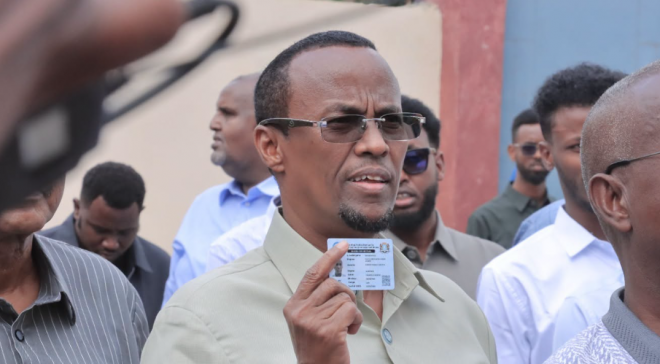
GO — MOGADISHU Term-expired President Hassan Sheikh Mohamud, the term-expired Speaker of the House of the People, Abdulkadir Mohamed Nur, and several federal ministers have issued closely aligned statements defending Turkey while condemning critics of Ankara’s involvement in Somalia’s domestic affairs.
The statements followed demonstrations and the burning of Turkish flags in parts of Puntland, Jubaland and South West State. The protests erupted after accusations that Turkish drones were involved in attacks in Doolow and elsewhere.
Turkey and Somalia’s term-expired federal government have denied political interference. The allegations surrounding the disputed strikes have not been established through an independent investigation.
Coordinated messaging
The strongest evidence of institutional coordination emerged from a forum held in Mogadishu on September 10. Some follow-up reports about the event were published on September 12.
The event was organised by the Turkish Presidency’s Directorate of Communications and opened by Speaker Abdulkadir Mohamed Nur.
Somalia’s Information Minister Abdulfatah Kasim Mohamud proposed permanent cooperation between Somali and Turkish institutions to monitor media narratives, analyse information and respond rapidly to what the two governments describe as “disinformation.”
The minister said Somalia’s Strategic Communication Department and its office responsible for countering disinformation were ready to work with their Turkish counterparts.
Participants also included Deniz Demir, coordinator of the Turkish Presidency’s Centre for Combating Disinformation, Somali and Turkish officials and academics. Turkish presidential communications chief Burhanettin Duran addressed the gathering by video.
The forum confirms institutional coordination between Mogadishu and Ankara. It does not, however, prove that Turkey directly wrote every statement subsequently delivered by Somali leaders and ministers.
The speaker’s Ankara connections
Abdulkadir Mohamed Nur studied at Ankara University and spent about eight years working at Somalia’s embassy in Turkey. As defence minister, he signed the two countries’ defence and economic cooperation framework in 2024.
Analysts, including Horn of Africa specialist Rashid Abdi, have described Nur as closely aligned with Ankara and positioned to advance Turkish interests in Somalia.
His professional history and central role in Turkey-related initiatives reinforce the view that he is one of the principal Somali officials promoting the relationship.
The Warsheikh facility and the satellite claim
Another major Turkish interest is the planned space-launch facility in Warsheikh, which Ankara intends to use to develop its independent satellite-launch capabilities.
Outgoing Turkish Ambassador Alper Aktaş said during his farewell ceremony that Somalia was expected to send “its first satellite” into space in 2027.
Earlier reporting, however, described the planned mission as the launch of a Turkish satellite from Somali territory. The Turkish government has also linked the Warsheikh facility to Ankara’s objective of independently launching its own satellites and spacecraft.
Presenting the project simply as Somalia launching its first national satellite therefore risks misleading the Somali public. Neither government has disclosed who will own the satellite, who will control the facility, the full terms of the agreement or Somalia’s technological and financial stake in the project.
French newspaper Le Monde has also reported that the Warsheikh installation could be a dual-use facility for satellite launches and long-range missile testing. Turkey has not publicly provided comprehensive details addressing the reported military dimension.
Converging interests
Turkey operates its largest overseas military base in Somalia and has trained federal units including the Gorgor commandos. Its interests also include maritime operations, oil exploration, fisheries, Mogadishu’s port and airport, and the Warsheikh project.
Somalia’s term-expired federal authorities, meanwhile, depend heavily on Ankara’s military and diplomatic support while confronting constitutional disputes, an unresolved electoral process and worsening relations with Puntland, Jubaland and opposition groups.
The coordinated messaging also shifts attention away from questions about who authorised the disputed strikes, the legal basis for the operations and the undisclosed terms of bilateral agreements. Instead, criticism is increasingly characterised as disinformation, hostility toward a friendly country or the product of a foreign agenda.
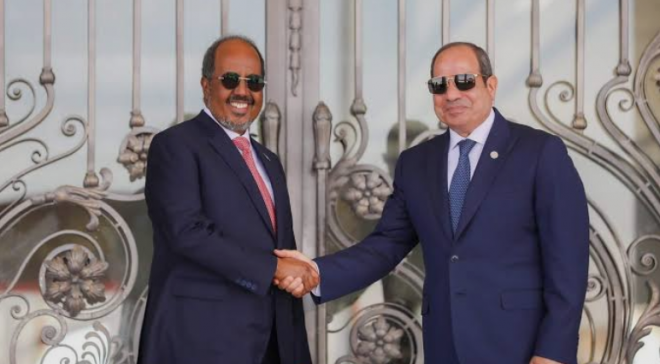
The available evidence establishes coordinated institutional messaging and strong overlapping interests between Mogadishu and Ankara. It does not yet establish that Turkey directly ordered or scripted every public statement made by Somali officials.
GAROWE ONLINE