Opinion: The January Deadline That Could Reconfigure Somalia’s Future
-
 Abdirahman Jeylani Mohamed
- Posted On 18-01-2026, 01:46PM
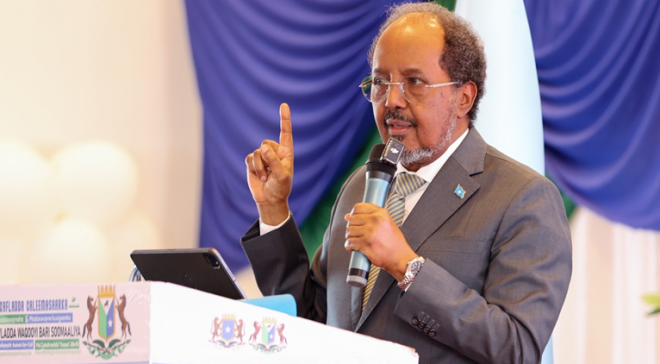
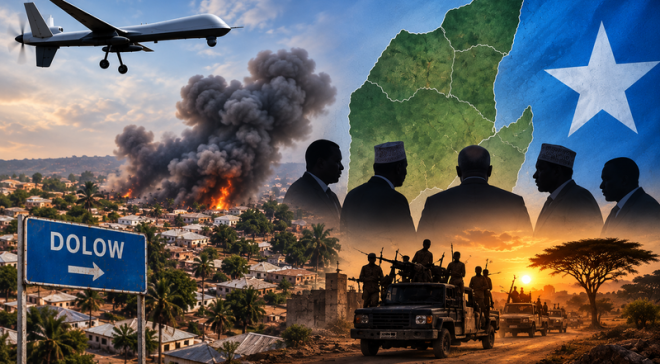
MOGADISHU — When President Hassan Sheikh Mohamud stepped off the plane in Las Anod this week, he wasn’t just returning to a town scarred by years of conflict — he was bearing the burden of a nation at the edge of fragmentation. In a rare visit to a contested city now administered as part of Somalia’s Northeast State, Mohamud made clear that his government sees the crisis with Somaliland and the mounting political standoff at home not as separate problems, but as existential threats to Somalia’s cohesion.
Somalia’s unity has always been more aspiration than reality. The collapse of state institutions in the early 1990s birthed a painful experiment in federalism — a balancing act between central authority and powerful regions that still lack full trust in Mogadishu. That fragile balance is now showing stress fractures deeper than at any moment in recent memory.
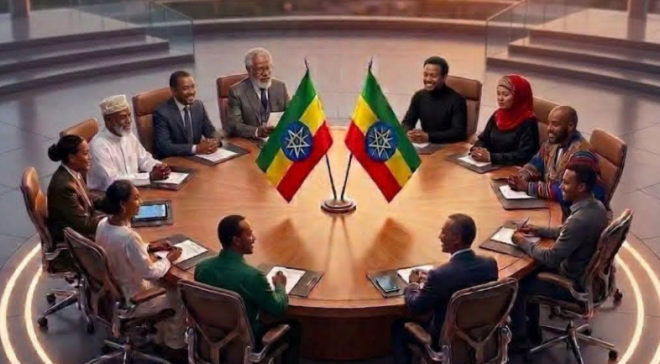
In late December, a broad coalition of political figures — including leaders from Puntland, Jubbaland, and prominent opposition voices — set a January 20, 2026 deadline for Mohamud to convene a genuinely inclusive national conference aimed at charting a consensual roadmap for elections and constitutional reform.
That deadline wasn’t pulled from thin air. Somali leaders north and south are weary of unilateral decision-making they say has repeatedly sidelined regional interests. Their communique from Kismayo made clear: if the president fails to forge agreement on elections and power-sharing, they will proceed with independent political processes that could undermine Mogadishu’s authority.
To many ordinary Somalis — taxi drivers in Mogadishu, pastoralists in Puntland, young voters yearning for political voice — this is more than a political dispute: it is about whether the Somali state can evolve beyond elite bargaining and clan rivalry into something that actually represents their hopes for the future.
Even as the clock ticks toward that deadline, a foreign policy shock has compounded the domestic crisis. On December 26, 2025, Israel became the first United Nations member state to formally recognize Somaliland as an independent nation — a breakaway region that unilaterally declared independence in 1991 but has never before been acknowledged by any country.
The announcement sent shockwaves through Mogadishu and across the Horn of Africa. President Mohamud condemned the move in the strongest possible terms, calling it an illegal violation of Somali sovereignty and vowing to thwart what he described as Israel’s “distorted strategy.”
His rhetoric resonates with many Somalis who see Somaliland as an inseparable part of their country’s territorial integrity. But it also reflects the very real fear that external actors are exploiting Somalia’s internal divisions for strategic advantage.
Somalia’s government moved quickly to cast the recognition as a threat not just to national unity, but to regional stability. At home, rallies in Mogadishu drew some of the largest protests seen since the recognition announcement, with citizens waving Somali flags and denouncing the decision.
International bodies followed suit. The African Union, the Organisation of Islamic Cooperation, and the Arab League all reiterated support for Somalia’s territorial integrity and condemned unilateral recognitions that violate international law.
Yet this diplomatic solidarity hasn’t eased Somalia’s internal anxieties. Instead, it has amplified a sense of siege among political elites and ordinary citizens alike — a siege that feeds into the domestic standoff over the electoral timetable.
President Mohamud finds himself navigating between two storms. Domestic pressures from regional leaders and opposition politicians demanding a fair, inclusive roadmap for elections and constitutional reform collide with geopolitical headwinds created by foreign recognition of Somaliland and its implications for Somalia’s sovereignty and security.
In Las Anod, Mohamud struck a conciliatory yet firm tone: he invited Somaliland leadership to dialogue, underscoring his willingness to negotiate on many issues — except national unity. “Unity is non-negotiable,” he declared, aiming to reassure Somalis who fear the country’s dissolution.
But his critics argue his approach lacks urgency and transparency. Many in the opposition say Mohamud has delayed meaningful national consultation and has shown limited willingness to compromise on core constitutional questions that might pave the way for elections built on broad legitimacy.
For ordinary Somalis — shopkeepers, students, farmers, educators — these high-level political maneuvers have tangible implications. They shape whether young people will see their votes counted in genuinely representative elections. They determine whether regional cooperation with neighbors will be grounded in mutual respect or marred by external meddling. They influence whether families displaced by decades of conflict see a peaceful future where their leaders listen as much as they speak.
What’s at stake now is not merely a conference in Mogadishu or a diplomatic rebuke halfway around the world. It is the trust that Somalis place in their political order — a trust that, if lost, could fragment the very idea of a unified Somali state.
As the January 20 deadline looms, the question is stark: Will Somalia’s leaders find common ground in time, or will multiple visions of governance pull this country apart just when unity matters most?
The author is Abdirahman Jeylani Mohamed, a Somali journalist based in Mogadishu, foreign policy commentator and communications specialist. You can reach out to him: Canaanbinu55@gmail.com