Kampala Communiqué Exposes Rift Between Somalia and Regional States
-
 Staff Reporter GAROWE ONLINE
- Posted On 01-08-2026, 06:02AM
MOGADISHU, Aug. 1 – A communiqué issued after a 3-day extraordinary summit in Kampala on Somalia's security has exposed differences between the Somali government and regional countries, after a disputed provision calling for a national political dialogue remained in the final document despite objections from President Hassan Sheikh Mohamud, sources familiar with the talks said.
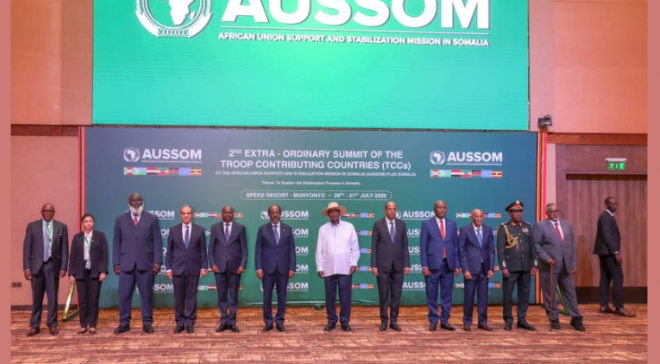
The communiqué followed an extraordinary summit of troop-contributing countries to the African Union Support and Stabilisation Mission in Somalia (AUSSOM), held in Kampala, Uganda, to discuss the mission's future, funding challenges and Somalia's security.
According to sources with knowledge of the discussions, the dispute centered on a provision urging President Hassan Sheikh to convene a dialogue bringing together Somalia's political leaders to resolve the country's ongoing political disagreements.
The sources said the Somali president opposed the inclusion of the clause, arguing that domestic political issues should not be incorporated into a summit focused on security and the future of AUSSOM.
Despite Somalia's objections, the provision was read publicly during the closing session and remained in the final communiqué, suggesting that participating regional states were determined to retain the language.
Political observers said the absence of several regional heads of state, many of whom sent ministers or other senior officials instead, reflected a cautious diplomatic approach and indicated that the summit was not intended to produce major political agreements with Mogadishu.
Analysts also viewed the inclusion of the political dialogue provision as a signal of growing concern among regional governments over Somalia's internal political divisions and the need for an inclusive political settlement alongside security efforts.
During the summit, President Hassan Sheikh reportedly argued that security issues should be treated separately from Somalia's internal political affairs, maintaining that the meeting's mandate was limited to discussing AUSSOM and regional security cooperation.
However, the decision to publish the communiqué without removing the contested provision has been interpreted by analysts as an indication that regional countries sought to formalize their position on the importance of political dialogue, despite the Somali government's reservations.
The Kampala summit came as Somalia faces mounting security and political challenges, while African Union member states and international partners seek to secure sustainable funding and define the future of the AUSSOM mission beyond its current mandate.
GAROWE ONLINE