Plundering the Seas: How Corruption and Secret Foreign Deals Dismantled Somalia’s Blue Economy
-
 Staff Reporter GAROWE ONLINE
- Posted On 27-10-2026, 06:48AM
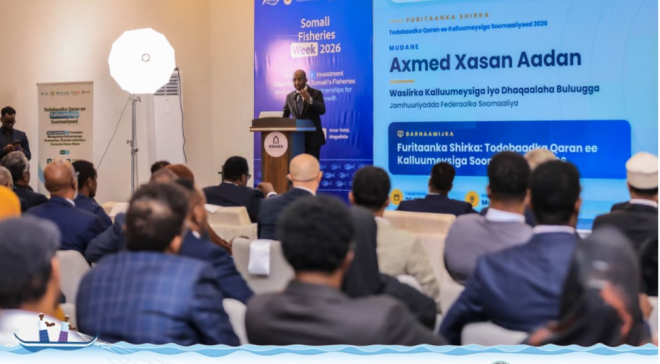
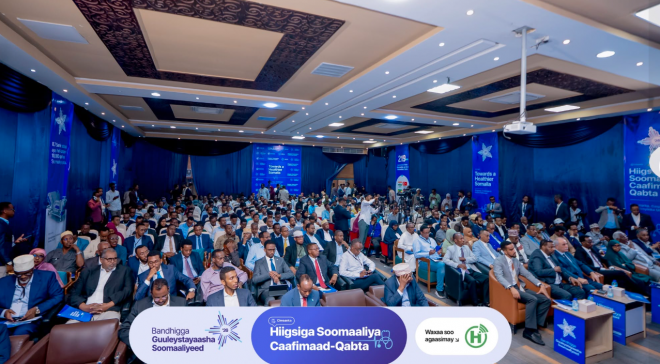
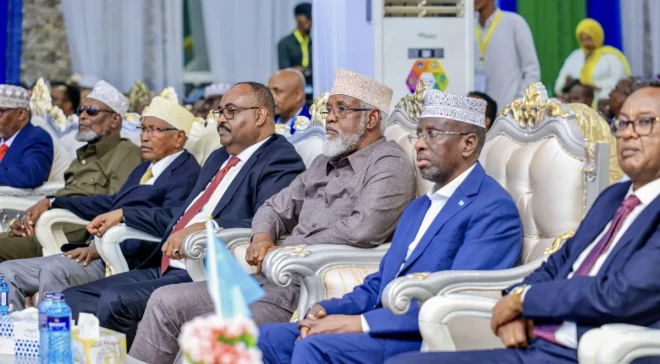
MOGADISHU, Somalia — When delegates gathered in Mogadishu today for the opening of the 3rd Somali Fisheries Week, the atmosphere inside the venue bore little resemblance to the ambitious national vision once promised to the Somali public. What was officially advertised as a premier week-long international summit celebrating the nation’s vast maritime potential laid bare severe institutional decay, systemic financial misappropriation, and the systematic surrender of Somalia's marine sovereign rights to foreign actors?
Despite its grand title, today’s gathering was abruptly compressed into a hasty two-day event, stripped of the multilateral backing, donor confidence, and broad institutional participation that defined previous iterations.
The fall of Somali Fisheries Week
The contrast between today’s scaled-back gathering and earlier editions could not be more glaring:
· Inaugurated with high expectations in September 2024, the inaugural Somali Fisheries Week was an authentic, multi-day national exhibition. It brought together over ten major international donor partners, development agencies, local fishing cooperatives, and regional government delegations aimed at leveraging Somalia’s 3,300\text{ km} coastline for sustainable local development.
· Monday’s gathering lasted mere hours. Deprived of international legitimacy and abandoned by legitimate sector stakeholders, the rebranded "week" functioned as little more than a staged political photo opportunity, underscoring the deep isolation into which the ministry’s current leadership has driven the sector.
Financial Mismanagement and Donor Flight
At the heart of this institutional collapse lies the fallout from the September 2024 edition of Somali Fisheries Week. Subsequent investigations and financial reviews revealed widespread irregularities and misappropriation of funds allocated by international development agencies for sector reform and coastal development.
Following these severe financial breaches, primary Western development partners—most notably the United States (USAID) and the United Kingdom (FCDO)—completely withdrew their funding commitments for the 2025 and 2026 fisheries programs. The exit of key international backers sent shockwaves through the Ministry of Fisheries and Blue Economy, instantly cutting off critical technical assistance, anti-piracy monitoring support, and coastal livelihood grants designed for local fishing communities.
Foreign Lifelines and Sovereign Concessions
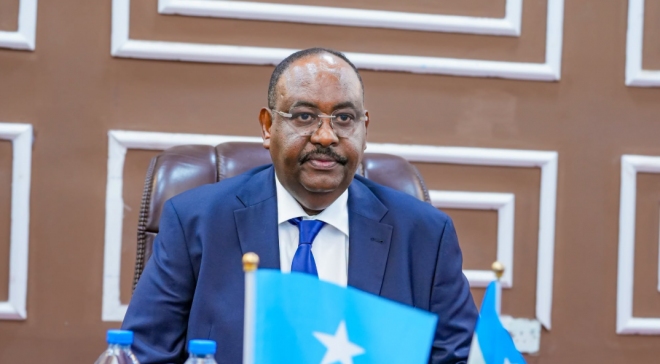
Facing an acute budgetary crisis brought on by donor flight, Minister Ahmed Hassan Adan and Director General Abdi Dirshe bypassed standard parliamentary oversight, procurement laws, and constitutional checks to secure operational funding elsewhere.
The Turkish Fisheries Deal
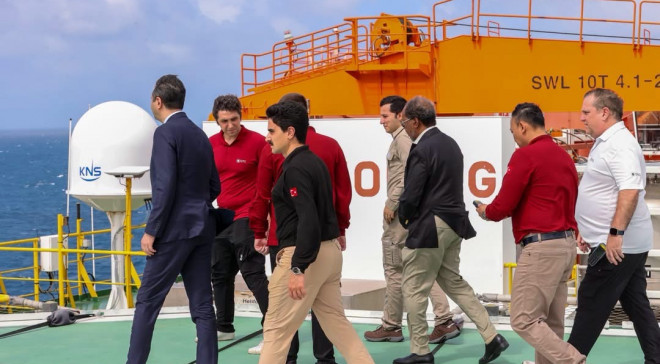
To replace lost Western donor funds, Ministry leadership finalized a controversial, multimillion-dollar fisheries arrangement with representatives from Ankara, brokered directly through the Turkish Embassy in Mogadishu. Under the guise of bilateral economic cooperation, the agreement effectively opens Somalia’s rich Exclusive Economic Zone (EEZ) to foreign industrial commercial fleets.
Maritime legal experts, civil society organizations, and local coastal advocacy groups have condemned the transaction, asserting that the Minister and Director General have signed away Somalia’s irreplaceable marine resources in exchange for short-term financial bailouts to cover ministry shortfalls.
Unlawful Regulatory Delegations via Hope Labs Group
Compounding the governance scandal is the improper involvement of Hope Labs Group. The private company was quietly contracted by the ministry to oversee key regulatory affairs, licensing mechanisms, and maritime compliance frameworks without fulfilling standard public bidding, statutory approvals, or legal vetting procedures.
By handing over critical sovereign regulatory powers to an unvented private entity, the leadership of the Ministry of Fisheries and Blue Economy has subverted public oversight. This opaque arrangement leaves local artisanal fishers vulnerable to unchecked industrial exploitation, ecosystem degradation, and unregulated foreign competition across Somali waters.
A Sector at a Crossroads
The 3rd Somali Fisheries Week stands as a stark warning of how crucial national developmental initiatives can be reduced to optics to mask administrative malfeasance. While ministry leadership celebrates short-term foreign funding injections, local coastal communities face declining fish stocks, environmental damage, and escalating economic displacement.
Without immediate parliamentary scrutiny, independent anti-corruption investigations, and a thorough audit of the bilateral agreements signed by Minister Ahmed Hassan Adan and Director General Abdi Dirshe, Somalia risks permanently surrendering the economic sovereign rights of its greatest natural asset—its ocean.