Somali Trade Union Calls for Decent Work and Media Freedom at UN High-Level Political Forum
-
 FESTU Press Release
- Posted On 26-07-2026, 07:03PM
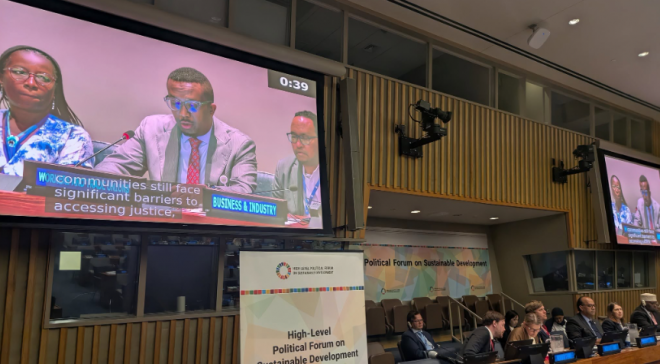
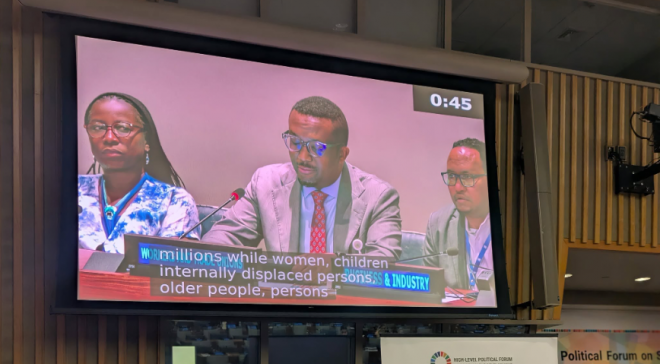
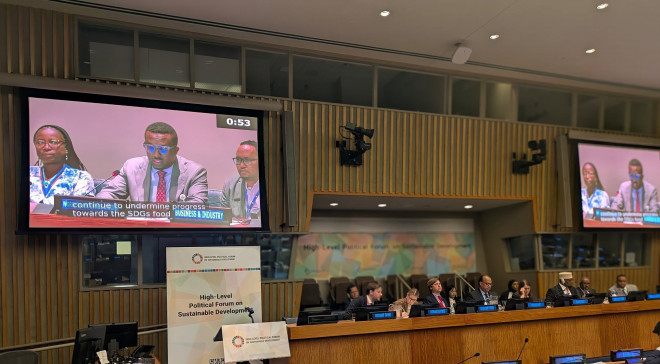
Somali Trade Union Calls for Decent Work and Media Freedom at UN High-Level Political ForumThe Federation of Somali Trade Unions (FESTU) has used the 2026 United Nations High-Level Political Forum (HLPF) on Sustainable Development to call for stronger protection of journalists, greater respect for labour rights and expanded social protection, arguing that these are essential to achieving Somalia’s Sustainable Development Goals (SDGs).
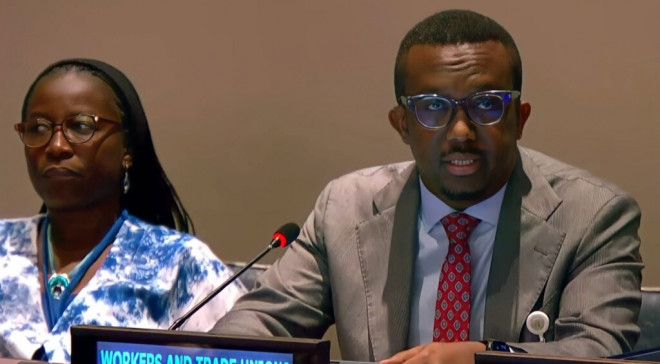
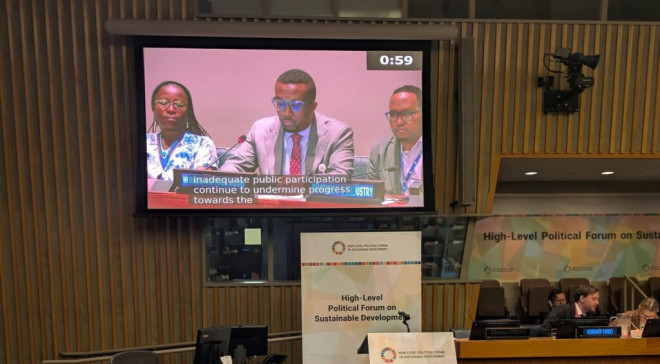
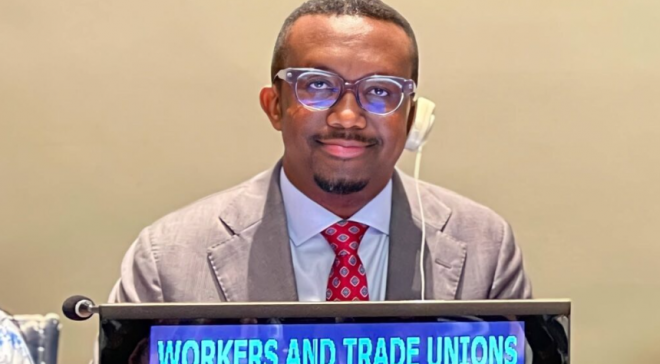
Speaking during Somalia’s Second Voluntary National Review (VNR), FESTU general secretary Omar Faruk Osman addressed the forum at the invitation of the president of the United Nations Economic and Social Council (ECOSOC). He told delegates that sustainable development cannot be achieved without full respect for fundamental human rights and internationally recognised labour rights.
Osman urged decisive action to end impunity for crimes committed against journalists and called for stronger protection of media workers. He also appealed for increased investment in decent work, wider social protection coverage and stronger social dialogue, saying these measures are essential for building peaceful, democratic and inclusive societies.
Somalia’s Voluntary National Review was presented by the Minister of Planning, Investment and Economic Development, Mahmoud Abdirahman Sheikh Farah (Beenebeene), who outlined the country’s achievements in implementing the 2030 Agenda while acknowledging the challenges that remain. He was joined by the director general of the Somalia National Bureau of Statistics (SNBS), Dr Abdisalam Abdirahman Mohamed, who presented the statistical evidence supporting the national report.
FESTU said its participation in the forum followed months of engagement in Somalia’s national SDG monitoring, implementation and review process. Together with its 12 affiliated trade unions, the federation participated in nationwide consultations coordinated by SNBS under the Ministry of Planning, Investment and Economic Development, contributing inputs and recommendations on decent work, labour rights, social protection, social dialogue, a just transition and other priorities affecting Somalia’s workforce.
According to the federation, many of those contributions were reflected in the country’s final Voluntary National Review, highlighting the contribution of organised labour to Somalia’s sustainable development agenda and the importance of inclusive policymaking.
Another highlight of the forum was the launch of Somalia’s Country Profile on the Realisation of the Sustainable Development Goals, jointly produced by FESTU and the International Trade Union Confederation (ITUC). The report calls for a new social contract that places workers at the centre of national development and identifies decent work, labour rights, social dialogue and social protection as key pillars for achieving the 2030 Agenda.
The publication also advocates effective implementation of Somalia’s Decent Work Country Programme and closer alignment with the National Transformation Plan (NTP). It outlines the priorities of Somalia’s working people and documents progress made through social dialogue, while presenting recommendations aimed at strengthening inclusive and sustainable development.
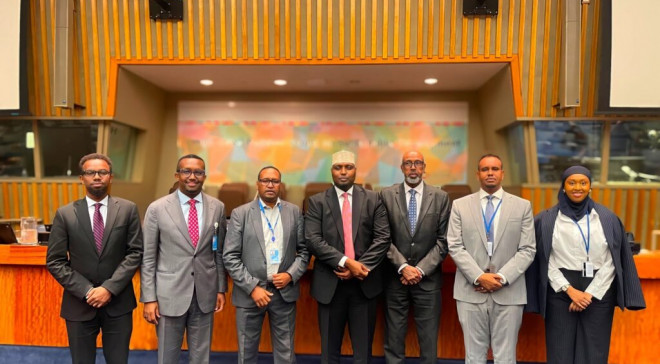
FESTU joined the global trade union delegation coordinated by ITUC, with EU support, allowing Somali workers to engage in international discussions on sustainable development and the future of work.
During the two-week-long forum, the delegation also held meetings with senior UN officials, government representatives and civil society organisations to discuss cooperation on decent work, labour rights, democratic governance, the safety of journalists and implementation of the Sustainable Development Goals.
Reflecting on the outcome of the forum, FESTU said Somalia’s trade union movement had contributed not only to the country’s Second Voluntary National Review but also to the preparation of the new UN Sustainable Development Cooperation Framework for Somalia. The federation noted that the progress made between Somalia’s first and second Voluntary National Reviews demonstrates growing participation by workers and other stakeholders in shaping national development policies.
FESTU reiterated its commitment to working with the UN, the federal government of Somalia, the federal member states and international partners to advance social justice, decent work and human and labour rights. The federation said it would continue to serve as a watchdog for workers’ interests and ensure that the voices of Somali working women and men remain central to the country’s sustainable development journey.