Somalia’s Foreign Policy Failure: Sheikh Sharif Accuses Hassan Sheikh of Diplomatic Missteps
-
 Staff Reporter GAROWE ONLINE
- Posted On 08-10-2026, 05:36AM
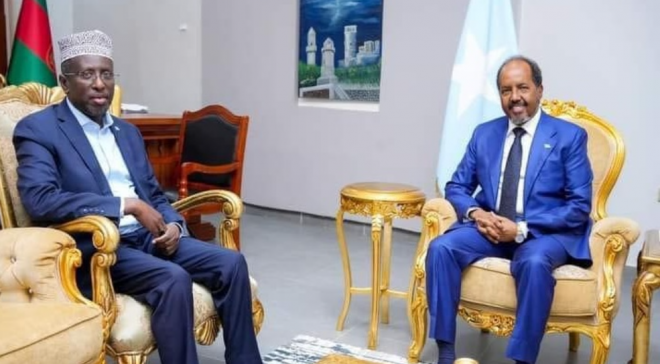
MOGADISHU, Somalia — Somalia’s former president Sheikh Sharif Sheikh Ahmed has criticised the government’s diplomatic approach, questioning its engagement with regional countries whose interests and alliances are at odds, as political and diplomatic tensions continue across the Horn of Africa.
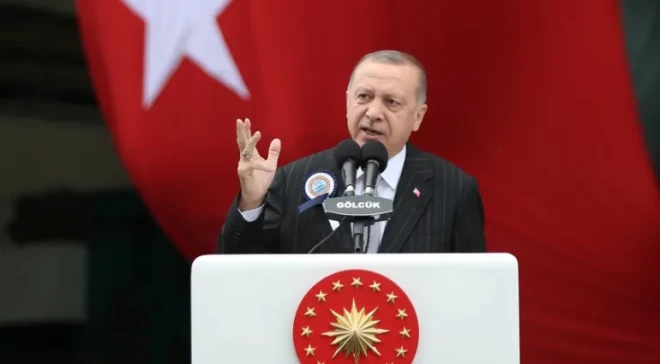
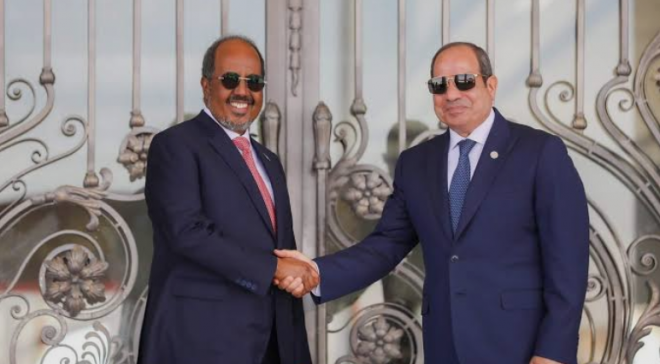
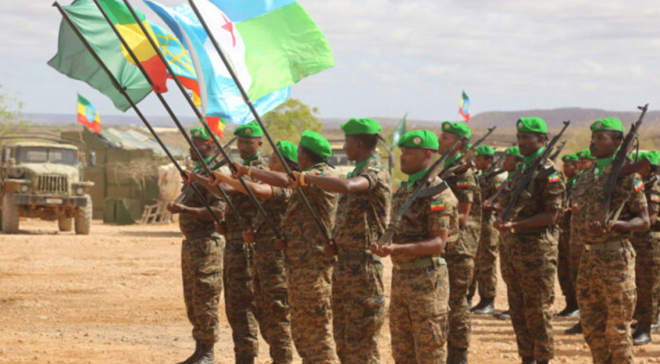
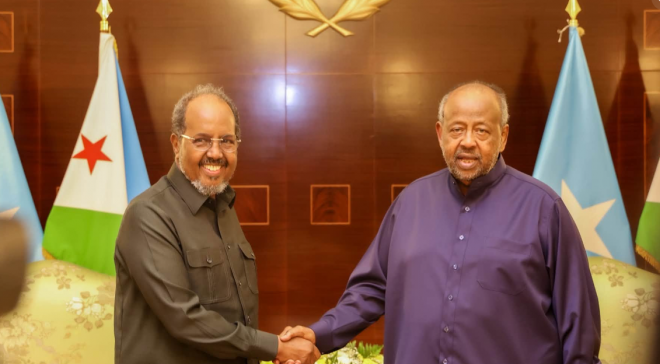
Sharif took aim at President Hassan Sheikh Mohamud’s recent diplomatic engagements, particularly his visits to Ethiopia and Egypt, arguing that Mogadishu risked undermining its national interests by seeking close relations with countries involved in regional rivalries.
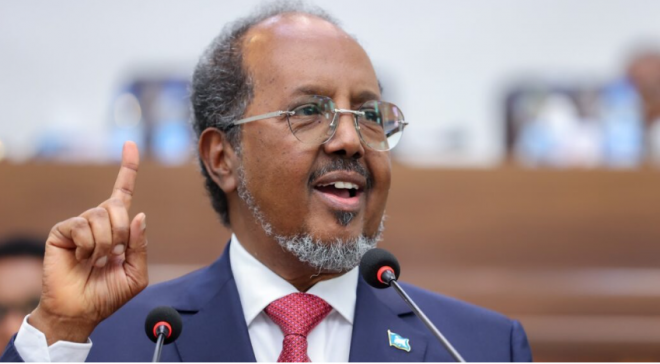
“It is a disgrace for Somali diplomacy that President Hassan Sheikh lands in Addis Ababa and travels to Cairo the following day,” Sharif said.
His remarks come as Somalia navigates complex relations with neighbouring countries, including Ethiopia and Egypt, which have competing strategic interests in the region. The two countries have been at odds over several issues, including Ethiopia’s ambitions to secure access to the Red Sea and Egypt’s opposition to Addis Ababa’s position on the Nile River.
Sharif warned that Somalia could lose sight of its own priorities if it became entangled in disputes between rival governments and political blocs.
He said the country’s foreign policy should be guided by shared interests, mutual benefits, good neighbourly relations and respect, adding that Somalia did not want to become indebted to or alienate any country.
“We do not want to get involved in, or become entangled in, the problems between governments and groups,” he said.
The former president’s comments highlight concerns among some Somali political figures about how the federal government is balancing its relationships with regional powers at a time of heightened geopolitical competition in the Horn of Africa.
Somalia has sought to strengthen ties with regional and international partners while defending its sovereignty and territorial integrity. However, the country’s diplomatic choices have increasingly become a subject of domestic political debate, with opposition figures questioning whether the government’s approach adequately protects national interests.
Sharif also rejected the notion that Somalia’s internal political crisis could be resolved through foreign intervention, insisting that dialogue among Somalis was the only sustainable way forward.
He said the country had overcome even more difficult circumstances in the past because its people had recognised the need to sit together and negotiate.
According to Sharif, Somalia had a political tradition of bringing leaders together every four years to hold elections and transfer power peacefully, a practice he said should be preserved.
His comments come amid continued disagreements over Somalia’s political future, including disputes over constitutional changes, electoral arrangements and the terms of political leadership.
Sharif said reaching a compromise would be difficult if some leaders were determined to remain in office through what he described as oppression, injustice, theft, betrayal and bloodshed.
He argued that political leaders must demonstrate a genuine willingness to make concessions if the country is to avoid further instability.
Somalia has struggled for decades to establish stable political institutions following the collapse of the central government in 1991. Although successive administrations have made efforts to strengthen federal institutions and improve governance, disagreements between political leaders have repeatedly complicated efforts to achieve consensus on elections and constitutional reforms.
Sharif, who served as Somalia’s president from 2009 to 2012, remains an influential political figure and has frequently criticised the federal government over its handling of national political affairs.
His latest remarks underline the growing debate over the relationship between Somalia’s foreign policy and domestic political challenges, as the country seeks to protect its strategic interests while addressing divisions at home.
GAROWE ONLINE