Somalia stands alone in opposing UN resolution on violence against women and girls
-
 Staff Reporter GAROWE ONLINE
- Posted On 19-11-2026, 08:16AM
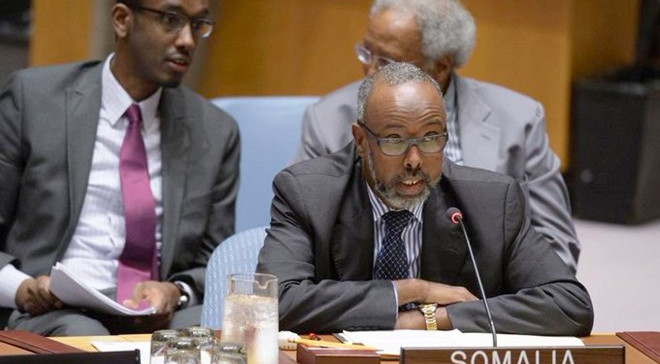
UNITED NATIONS — Somalia was the only country to vote against a United Nations resolution calling for intensified efforts to prevent and eliminate violence against women and girls, while the United States and Russia were among six countries that abstained.
The resolution, sponsored by France and Britain, was approved by the UN General Assembly's Third Committee on Tuesday by a vote of 175 to one, with six abstentions. It calls on member states to take comprehensive measures to prevent violence, intimidation and attacks against women and girls and strengthen laws and policies to address the problem.
The text also extends its definition of violence to online and digital spaces, urging countries to adopt legislation and policies to protect women and girls from online harassment, defamation and hate speech.
France, which introduced the draft alongside Britain, highlighted the growing threat of digital violence, saying women in some parts of the world were increasingly affected by abuse through online platforms and technology.
An August report by UN Secretary-General António Guterres found that nearly 50,000 women and girls were killed by their partners or other family members in 2024.
The report warned that technology had extended violence against women into the digital sphere, with online stalking, surveillance and harassment increasingly being used to control and track victims. It cited GPS tracking, spyware and monitoring applications as tools used by perpetrators.
The resolution faced lengthy negotiations, particularly over references to sexual and reproductive health, safe abortion and other gender-related terminology.
The United States, which abstained alongside Russia, Argentina, Burkina Faso, Belarus and Cameroon, said it was disappointed that the text retained references to sexual and reproductive health and safe abortion.
"There is no international 'right to abortion,'" the US said in its explanation of vote.
A proposed amendment seeking to place the resolution under a broader national sovereignty provision was also rejected. Several countries had pushed for changes to language addressing intimate partner violence, marital rape and intersecting forms of discrimination, drawing criticism from other delegations who said the proposals would weaken protections for women and girls.
The United Kingdom welcomed the outcome, saying a woman is killed by her partner or a family member every 10 minutes, describing the figures as appalling.
The European Union also welcomed the vote, calling gender-related killings a global scourge and saying the result demonstrated international commitment to ending violence against women and girls.
The resolution's approval by the Third Committee is not yet final. It must still be formally adopted by the UN General Assembly in December.
GAROWE ONLINE