IEA boss reveals that the world is facing energy crisis
-
 News Agencies
- Posted On 17-01-2023, 05:15PM

NAIROBI, Kenya - The world is witnessing the biggest energy crisis ever recorded in history, especially after Russia’s invasion of Ukraine, according to Fatih Birol, executive director of the International Energy Agency.
Birol was speaking at the World Economic Forum in Davos on Jan. 17, Birol said the unprecedented upheaval has given a big boost to clean energy development and added that security concerns are driving the advancements which are happening in the renewables sector.
“We are entering the first global energy crisis. Our world has never ever seen a crisis of this depth. Russia until Feb. 24 was the number one energy exporter of the world, the number one oil exporter of the world, and a major player in the coal market,” said Birol.
“In the past, clean energy was renewables, electric cars, etc. They were growing. But the main driver was environmental reasons. And now, the biggest driver of renewable energy growth is energy security. Renewables are pushed very stronger for energy security reasons,” he added.
Birol further pointed out that the clean energy sector is growing rapidly, as renewable energy usage in 2022 was 25 percent higher compared to 2021.
“In 2019, only 3 cars out of 100 sold were electric, and last year it was 13 percent. In 2030, every second car sold in Europe, the US, and China will be electric,” Birol added.
Birol also noted that adequate investments are needed to accelerate the developments in the clean energy sector.
“Today the world invests $1 in fossil fuels and $1.5 in clean energy. If the world wants to reach the sustainability target, this ratio of 1 to 1.5 should be 1 to 9,” Birol said.
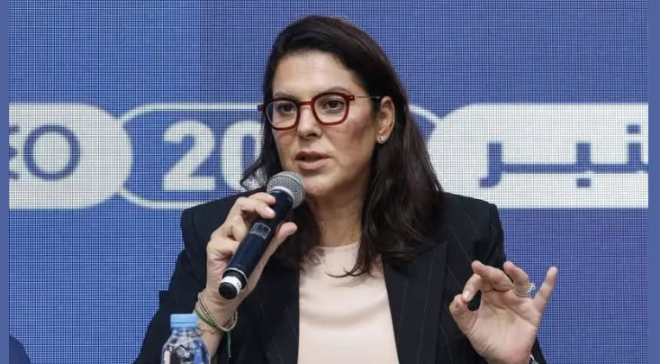
For her part, Vicki Hollub, president and CEO of Occidental Petroleum, said that oil, even now, is “the highest intensity energy at the lowest cost.” She also made it clear that necessary steps including the development of carbon capture technology should be embraced to reduce emissions.
She also noted that the oil and gas industry is always being attacked for emissions, while several other industries are also contributing to carbon emissions to the atmosphere.
“It is important to understand that the enemy is the emission and not the energy source. What we need is a powerful transition. As the transition happens, we should make sure that we do not leave developing and emerging countries behind,” said Hollub.