EDITORIAL: Puntland Has Overcome an Immediate Threat — Now It Must Build a Security Force Above Clan and Politics
-
 GAROWE ONLINE
- Posted On 09-08-2026, 06:08PM
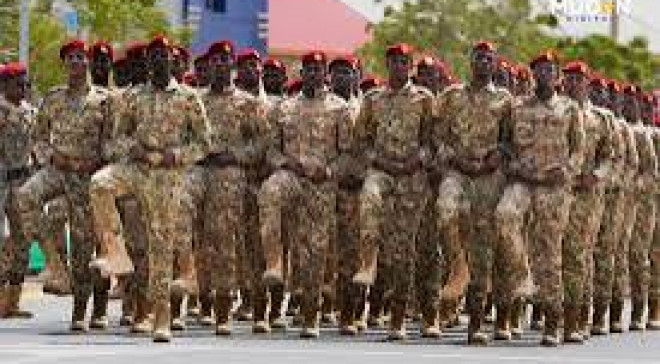
Recent security operations in Galkayo, Bosaso and other areas have presented Puntland with an opportunity far greater than the immediate success of taking control of military compounds.
The central question is no longer simply who controls those bases. It is whether Puntland can use this moment to build a security system that prevents armed formations operating outside a single, accountable chain of command from emerging again within its territory.
Puntland has said that an internal security threat emerged from armed forces that were not directly under the command of its security institutions, some of which it linked to Somalia’s Federal Government. Recent events have demonstrated the dangers that arise when armed units maintain command structures, financial arrangements or political relationships outside the established institutions of the state.
But if Puntland’s response ends with dismantling these forces or taking control of their compounds, the underlying problem will remain unresolved.
One Force, One Command, One Government
Puntland should now undertake a security-sector reform that goes well beyond the events of recent weeks.
There may still be forces that formally take orders from the government but whose recruitment, structure or internal cohesion has historically been rooted in particular clans or local communities. Such arrangements have long been part of Somalia’s political and security realities, but they cannot remain a permanent foundation for a modern state.
The objective should not be to dismiss those soldiers. They should instead be systematically integrated into Puntland’s formal security forces.
Every soldier should have a recognised rank, personnel record, regular salary, standardised training and clearly defined legal responsibilities. Every unit should operate within a transparent chain of command that ultimately leads to a single command-and-control structure administered by the Puntland government.
Puntland should reach a point where there is no longer a “so-and-so’s force,” a “clan force” or an armed unit identified with a particular politician or individual.
There should be only one: the Puntland Security Forces.
The Security Forces Must Serve the State, Not the Government of the Day
There is an important distinction between loyalty to the state and loyalty to those temporarily governing it.
Puntland’s security forces must be loyal to the Constitution, the law and the institutions of government. They must not become loyal to an individual, political party or faction.
Governments change. One president leaves office and another takes his place. Ministers and parliaments change. Security institutions, however, must remain permanent institutions of the state.
That principle also protects political opponents.
A politician who disagrees with the Puntland government today should know that the police and security forces belong to him as much as they belong to someone who supports the administration.
Political disagreement must never, by itself, make someone a security threat. Security institutions should respond to unlawful conduct, violence or armed activity outside the legal framework — not to legitimate political opinion.
When every citizen, whether government supporter or opponent, sees the security forces as institutions protecting their safety and rights, the state gains one of the most valuable assets any security institution can possess: public trust.
Clan Must Be Removed From the Chain of Command
Puntland cannot erase the social realities from which it emerged, nor should it attempt to do so. Traditional elders, local communities and customary structures continue to play important roles in reconciliation and conflict resolution.
But there must be a clear boundary when it comes to military command.
A traditional elder should not appoint a military commander. A politician should not maintain a unit personally loyal to him. A businessman should not finance an armed force over which he can exercise influence. And a clan should not possess a government security unit whose first loyalty reverts to the clan whenever political tensions arise.
A soldier can come from a clan. The security force itself cannot belong to a clan.
Puntland Needs a Unified Command and Operations Centre
One of the clearest lessons from the present situation is the need for a central institution capable of coordinating Puntland’s security services.
Puntland should establish or strengthen a Unified Security Command and Operations Centre, bringing together the defence forces, police, Darawish, intelligence services, maritime forces and other relevant security institutions.
Such a centre should provide the government with a clear operational picture: where units are deployed, who authorised their deployment, what operation they are conducting and which commander is accountable for them.
Puntland should never again find an armed force operating within its territory without the government having a clear understanding of who finances it, who supplies its weapons and where its orders originate.
Register Every Soldier and Account for Every Weapon
The next stage should include a comprehensive security census across Puntland.
All government security personnel should undergo modern biometric registration. State-owned weapons should be registered, while military vehicles, equipment and bases should be incorporated into a central government inventory.
A soldier’s salary should be directly linked to his official personnel record.
Such a system would help eliminate “ghost soldiers,” double salary payments and opportunities for individuals or groups to establish armed units without the Puntland government having full visibility over their personnel and resources.
Reform Must Not Become a Short-Term Campaign
The greatest mistake Puntland could make now would be to view these operations solely as a response to its current dispute with Somalia’s Federal Government.
Even if the political dispute with Mogadishu ended tomorrow, the need to reform Puntland’s security institutions would remain.
This is a state-building project.
Puntland needs a multi-year programme to standardise training, salaries, ranks, promotions, retirement, discipline and command structures across its security services.
A soldier must know what his future looks like. He should understand how he can advance through the ranks, what rights he has if he is wounded in service and what protection his family will receive if he dies while defending the state.
A soldier without a professional future can easily become dependent on whoever provides money or patronage.
A soldier with a career, rights and an institutional identity depends on the state.
Strong Institutions Are the Best Defence Against External Interference.
The events in Galkayo and Bosaso have highlighted a danger that has repeatedly confronted Somalia: when state institutions are weak, political disputes can quickly enter the security sphere.
Military operations alone cannot provide a lasting defence against such interference.
Puntland must instead create a system that leaves little space for anyone seeking to establish a parallel armed structure within its territory.
If every soldier has a salary, rank, identification and clear chain of command; if every weapon is registered; if every military base is under government authority; and if the security forces are professionally trained and socially representative, it becomes far more difficult for any political actor — whether from inside or outside Puntland — to divide or manipulate them.
The Real Victory Still Lies Ahead
Puntland now has an opportunity to turn a security crisis into lasting institutional reform.
Success should not be measured simply by capturing a compound or dismantling an armed group.
Real success will come when no armed force operates inside Puntland outside the formal state structure; when soldiers are identified not by their clan affiliation but by their service number, rank and the flag they serve; and when government supporters and political opponents alike have equal confidence in the forces responsible for protecting them.
The recent operations may have opened the door to that future.
Puntland must now turn a short-term security achievement into lasting state reform: one security force, one command, one chain of authority, serving all of Puntland — today and under every government that comes tomorrow.