Somalia’s Unity and the Politics of Selective Nationalism
-
 GAROWE ONLINE
- Posted On 24-05-2026, 10:29PM
EDITORIAL | For more than three decades, Somalia has remained trapped between two competing political realities: the search for national unity and the gradual normalization of division.
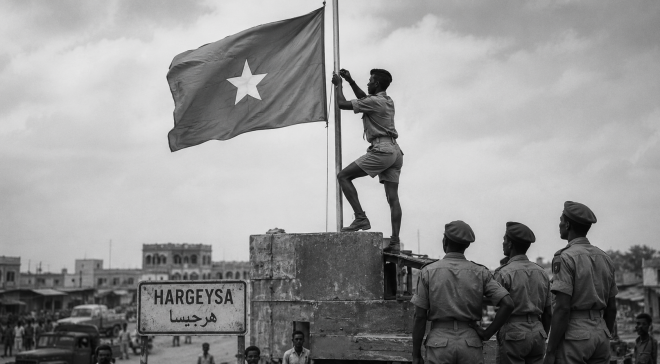
Since Somaliland declared separation in 1991, successive Somali governments have repeatedly entered negotiations with Hargeisa in Djibouti, Turkey, Ethiopia, and the United Arab Emirates. Yet despite years of talks, communiqués, and international mediation, no political breakthrough has ever emerged.
What makes the issue more controversial is not simply Somaliland’s position, but the inconsistent approach adopted by political leaders in Mogadishu over the years.
While Somaliland openly pursued international recognition and acted increasingly like a separate state, leaders in Villa Somalia often maintained close political relations with Hargeisa without developing a serious national strategy capable of defending Somalia’s territorial unity through diplomacy, development, or political engagement.
At the same time, Puntland — founded in 1998 on the principle of preserving Somali unity — found itself politically isolated despite playing a central role in rebuilding Somali state institutions after the collapse of the central government.
Unlike Somaliland, Puntland never based its political project on secession. Its leaders consistently argued for a federal Somalia and invested heavily in efforts aimed at restoring national governance. Yet many in Puntland believe that commitment was rarely matched by political support from successive federal administrations.
Instead, Puntland frequently complained of development restrictions, political pressure, and limited security assistance even while confronting terrorist groups and instability across large parts of northern Somalia.
The contradiction has become increasingly difficult to ignore.
Somali leaders regularly speak about protecting national unity, yet major political decisions often appear driven more by short-term power calculations than by a consistent national vision. The 4.5 political system itself deepened those contradictions. Politicians representing Somaliland remained central players inside federal institutions in Mogadishu even though many could not politically operate inside Hargeisa itself.
The Tukaraq crisis in 2018 exposed those tensions even further.
When Somaliland forces entered Tukaraq while President Mohamed Abdullahi Farmaajo was visiting Garowe, Puntland interpreted the development as a direct challenge to Somalia’s territorial integrity. But the federal response remained cautious and limited to broad calls for restraint, avoiding direct condemnation of the takeover.
For many in Puntland, that silence reinforced a growing perception that Somalia’s political leadership was unwilling to confront sensitive issues involving Somaliland for fear of destabilizing parliamentary alliances and clan-based political arrangements in Mogadishu.
Today, debates surrounding Somalia’s unity continue to generate emotional reactions across the country.
Garowe Online does not support attempts by youth groups to provoke political tensions through symbolic acts such as displaying the Somaliland flag in public spaces in Garowe. However, the intense backlash from some Mogadishu-aligned political voices in Puntland also appears selective and politically motivated, particularly at a time when Somalia remains deeply divided over constitutional disputes, elections, and questions surrounding political legitimacy.
Equally important is another question that rarely receives the same level of national attention: why was there limited outrage when parts of Sool and Cayn were separated from Puntland without a legal process or a broad political consensus among the communities that jointly established Puntland in 1998?
That question reflects a deeper national problem.
The conversation about Somalia’s unity increasingly appears shaped by political convenience, clan calculations, and shifting alliances rather than by a clear constitutional or national framework accepted by all Somalis.
In many ways, Somalia’s crisis today is no longer simply about separation or unity. It is about whether the country can develop a fair and consistent national vision that applies equally to all sides — without selective outrage, political double standards, or temporary alliances built around power-sharing alone.
GAROWE ONLINE