

EXCLUSIVE INTERVIEW: Ethiopian Diplomat Yidnekachew Tekle Highlights recent election, Democratic Milestones and Economic Transformation of Ethiopia
-
 Staff Reporter GAROWE ONLINE
- Posted On 17-06-2026, 07:59AM
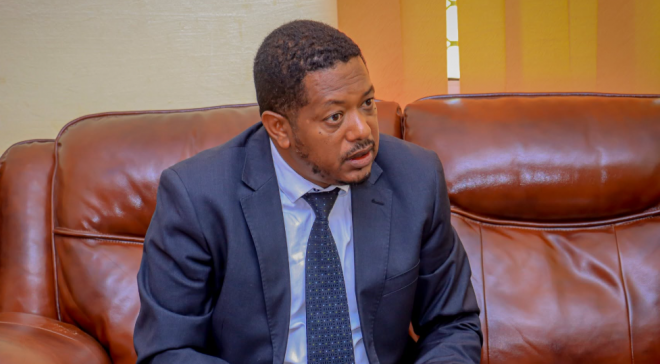
GAROWE, Somalia — The Garowe Online has conducted an exclusive interview with Yidnekachew Tekle, Minister Counsellor at the Ethiopian Consulate in Garowe, Puntland State of Somalia. The wide-ranging discussion focused on Ethiopia's political landscape following the recent June 2026 general elections, ongoing democratic reforms, institutional changes, and the major economic transformations sweeping the nation.
Garowe Online: How would you describe the current state of Ethiopia’s democratic process and political reforms?
Yidnekachew Tekle: Under the leadership of Prime Minister Dr. Abiy Ahmed, the country has exhibited extraordinary performance that values the democratic essence and has reshaped a political landscape that was highly inefficient prior to the current administration.
The National Dialogue initiative is an outstanding milestone in the history of modern Ethiopia, creating a national platform to address long-standing political and constitutional disagreements through structured discussion rather than a cocktail of chaos. Historically, Ethiopian governments tended to exclude political rivals from meaningful participation in state institutions. For the first time in Ethiopia’s modern history, opposition figures have been brought into senior positions within the executive branch at both the federal and regional levels. This represents a notable departure from a long-established tradition of exclusion.
Ethiopia is currently endeavouring to manage economic reform, political transition, institutional change, and national integration simultaneously. Because of this, the country is well-positioned to emerge as one of the defining success stories of the twenty-first century. That possibility, perhaps more than any other factor, is what makes the years ahead promising and worth watching following the June 1, 2026, General Elections.
The reformist administration went the extra mile by enacting laws and regulations to reform the electoral commission, the justice system, and media freedoms. It has also strengthened various civil organizations, released political prisoners, and promoted the active participation of political parties. These strong commitments from the government have inspired political actors to participate with full confidence and encouraged democratic institutions to operate independently. Generally, I can assert that the government’s modus operandi is highly conducive to strengthening democratic institutions and running stable political activities for all stakeholders.
Garowe Online: What are the key takeaways from Ethiopia’s recent elections, and how do they reflect the country's democratic growth?
Yidnekachew Tekle: One of the defining drives of the current era has been the effort to move political competition away from the battlefield and into democratic institutions. For generations, political transitions in Ethiopia were accompanied by attempts to control power by force. However, the systemic changes starting from 2018 have marked a massive shift away from this trend.
The 7th general election, held on June 1, 2026, was a glorious moment in the history of our national elections. More than 54 million Ethiopians participated, waiting in long queues from early dawn until midnight to peacefully cast votes for their political choices. The Ethiopian people showed immense dignity, patience, civic duty, and a peaceful manner throughout registration, voting, and waiting tolerantly for the results.
In this democratic exercise, 10,934 candidates representing 42 political parties, alongside 80 independent candidates, competed. Among them, 2,198 candidates contended for the federal parliament, 8,736 for regional seats, and 501 competed specifically out of the 547 total parliamentary seats. The African Union (AU), IGAD, and various independent observers were on the ground to monitor the process. This scale and data firmly witness that Ethiopia stands as the second-largest democracy in Africa.
Garowe Online: How is Ethiopia ensuring transparent elections and accommodating different political voices?
Yidnekachew Tekle: In light of the significant political changes over the last eight years, extensive electoral reforms have been introduced. Central to these reforms was the establishment of the National Electoral Board of Ethiopia (NEBE) as a completely independent body.
Major steps have been taken to make the registration process highly accessible, including targeted outreach initiatives in marginalized areas and direct engagement with political parties to ensure better participation. NEBE openly invited both domestic and international observers to monitor the elections, backed by intensive public awareness campaigns.
Recognizing that Ethiopia possesses a diverse culture and a multi-national fabric, the government has worked hard to allow for the equitable representation of regional and national voices. Additionally, the adoption of electronic registration marks a significant technological advancement in safeguarding the integrity of our electoral process.
Garowe Online: What strategies are being used to balance regional diversity with national unity?
Yidnekachew Tekle: A notable and deliberate measure has been the meaningful inclusion of regions that had been historically cornered at the periphery before the current government assumed power in 2018. Regions such as Afar, Somali, Benishangul-Gumuz, Gambella, and Harari are now central to the federal system and national decision-making processes. The Ethiopian government has heavily emphasized inclusive governance by ensuring that these various groups are equitably represented across both federal and regional political structures.
Garowe Online: What are the key milestones of Ethiopia’s current economic reforms?
Yidnekachew Tekle: Ethiopia has undertaken sweeping economic reforms aimed directly at enhancing the lives of its people. Starting in 2018, we began opening up our economy to market-oriented reforms, particularly unlocking sectors such as banking, telecommunications, and transport. The country also revised its investment laws to aggressively attract Foreign Direct Investment (FDI).
Significant infrastructure developments have been realized, including high-standard highway networks, clean energy generation—most remarkably highlighted by the Grand Ethiopian Renaissance Dam (GERD)—and specialized industrial parks intended to boost manufacturing.
Concurrently, Addis Ababa is transitioning into a futuristic, green, and globally competitive business hub, characterized by sprawling skyscrapers, massive corridor expansions, and revitalized green riverfronts that redefine its historic character.
Ethiopia’s $30 billion strategic infrastructure roadmap encompasses the $12.5 billion Bishoftu International Airport project, Ogaden natural gas extraction in Gode, large-scale fertilizer complexes, and a massive national housing program targeting 1.5 million units. These massive endeavors are aimed at swiftly boosting industrial and agricultural output, reducing import reliance, and firmly establishing Ethiopia as Africa’s leading aviation hub.
Furthermore, because Prime Minister Abiy Ahmed framed wheat self-sufficiency as part of a broader national aspiration, Ethiopian farmers are today harvesting more than 50 quintals of wheat per hectare. Food sovereignty, economic resilience, and national confidence are deeply interconnected, and this agricultural transformation remains absolutely central to Ethiopia's future development path.
Garowe Online: Thank you for your time, Minister Counsellor.
Yidnekachew Tekle: Thank you.
