Somalia’s Constitution Dispute Deepens Over Ministers’ Roles
-
 Staff Reporter GAROWE ONLINE
- Posted On 12-10-2026, 06:51AM

MOGADISHU, Somalia — Somalia’s federal government is facing growing internal divisions over how to implement constitutional amendments signed into law without a political agreement among key stakeholders, with a dispute over provisions separating parliamentary and ministerial positions threatening to deepen tensions within Prime Minister Hamza Abdi Barre’s administration.
The dispute centers on provisions that parliamentary leaders want to enforce from Oct. 14, requiring officials to choose between serving as lawmakers and holding ministerial positions. The proposed implementation has raised concerns among some Cabinet members from Jubaland and Puntland, who are part of the political power-sharing arrangement associated with Barre.
Some ministers are reportedly uncertain whether to retain their Cabinet positions or give them up to keep their parliamentary seats. They also face questions over how parliamentary seats would be filled if lawmakers resign to remain in government and whether they could retain their ministerial posts after leaving Parliament.
Barre has privately acknowledged the difficulty of defending his government amid the growing dispute, according to the account of recent parliamentary sessions. He also criticized letters and decisions from the Cabinet that sought to implement changes to the civil service, which the House of the People’s leadership rejected.
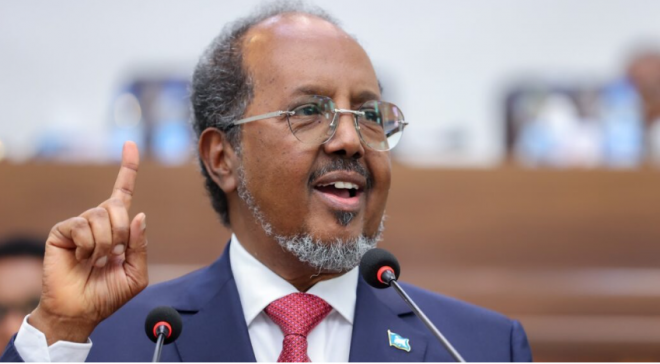
President Hassan Sheikh Mohamud, meanwhile, has insisted on implementing the new constitution, despite objections from political figures who argue that the amendments lack the broader political consensus needed for their implementation.
A delegation led by the deputy prime minister recently approached the president seeking a postponement of the implementation of the disputed provisions. The delegation reportedly encountered resistance to delaying the requirement for officials to choose between parliamentary and ministerial roles.
During a meeting the night before, however, Hassan Sheikh indicated that consultations should take place, according to the account provided.
The federal government views the dispute as a potential threat to its political future, amid concerns that the implementation process could destabilize the Cabinet and complicate the government’s ability to maintain its parliamentary support.
Parliamentary leaders have defended their position by arguing that the constitutional provisions must be enforced to uphold the supremacy of the law. The disagreement highlights wider tensions over the implementation of Somalia’s constitutional amendments and the balance of power between the presidency, Cabinet and Parliament.
The dispute comes amid a broader political crisis over the constitutional process, with questions remaining over the legitimacy and implementation of the amendments in the absence of an agreement among key political stakeholders.
GAROWE ONLINE