Saudi Arabia’s Red Sea Ambitions Expose the Illusion of Its Neutral Mediation
-
 Mohsin Osman
- Posted On 29-10-2026, 03:10PM
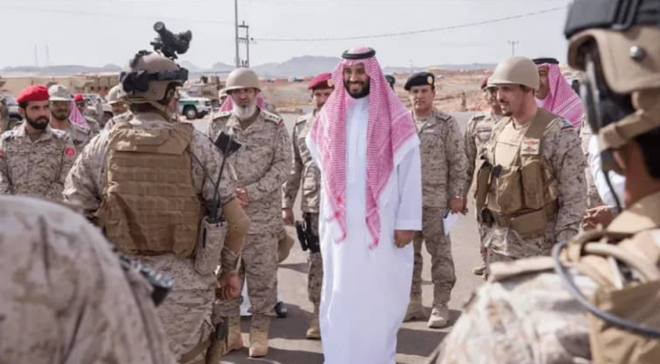
While Riyadh markets itself as an impartial regional mediator, its behind-the-scenes actions across Sudan, Yemen, Eritrea, and Somalia reveal a proactive strategy of building a dominant security axis to protect its own maritime and geopolitical interests.
Saudi Arabia projects itself as a regional mediator that brings warring parties to the negotiating table to end conflicts. Its behind-the-scenes actions, however, reveal a different strategy. Across multiple crises, Riyadh has actively backed specific factions, a role that fundamentally conflicts with true neutrality.
From Port Sudan to Mogadishu, by way of Yemen and Eritrea, the question is no longer whether Saudi Arabia can mediate between adversaries but where it stands within the conflicts themselves, and how far it controls the balance of power around the Red Sea and the ports and corridors that matter to it. Seen that way, the neutral mediator gives way to a state building an axis of influence on both shores of the sea.
Sudan is where the two roles first collided. Saudi Arabia sponsored the Jeddah talks between the Sudanese army and the Rapid Support Forces in 2023 as a party working to end the war and protect civilians, and its stance since has leaned increasingly toward the army led by Abdel Fattah al-Burhan.
That lean acquired a price in January 2026, when Reuters revealed negotiations over a $1.5 billion Pakistani arms deal for the Sudanese army, covering aircraft, drones and air defence systems, with Saudi Arabia mediating. By April the deal had stalled, and the reason was again Riyadh. The agency reported that Pakistan had suspended the sale after a Saudi objection and the withdrawal of Saudi funding, and on the same day Crown Prince Mohammed bin Salman received al-Burhan in Jeddah. A mediator tied to the armament of one party to the conflict cannot also claim neutrality.
Where Sudan shows mediation and partisanship overlapping, Yemen shows direct Saudi military intervention. Since March 2015 Riyadh has led a military coalition, carried out air operations, supported government forces and local armed groups, and supplied economic aid to the internationally recognised government.
Its presence has not been confined to the Houthis. Saudi Arabia has become an influential party in the fighting inside the anti-Houthi camp, above all as its dispute with the Southern Transitional Council has escalated. In early January 2026 Saudi aircraft struck Transitional Council positions in Hadramawt while Riyadh-backed forces advanced to retake southern areas, at the very moment Saudi Arabia was calling on Yemeni parties to engage in dialogue. Military pressure alters the balance of control, and a political track then arranges the outcome.
Riyadh’s relationship with the Yemeni Islah Party adds a further contradiction. The Carnegie Endowment has documented Saudi reliance on forces linked to the party against the Houthis, and the military and financial support given to them, despite Riyadh’s declared hostility to the Muslim Brotherhood, to whose political current Islah belongs. In Yemen, then, Saudi Arabia is one of the forces that shaped the war, chose its allies and drew its maps of control.
The pattern extends across the water. Saudi Arabia built close security ties with Eritrea during the Yemen war, when Eritrean territory and ports served the coalition’s military arrangements, and coordination between Riyadh and Asmara continued through 2025 and 2026 as tension rose between Eritrea and Ethiopia over access to the Red Sea. Regional analyses report that Saudi Arabia and Egypt lean toward the Eritrean position against Ethiopia’s maritime ambitions, while Addis Ababa watches the rapprochement between Riyadh, Cairo and Asmara with concern. The irony is that Saudi Arabia itself sponsored the 2018 peace agreement between the two countries, signed in Jeddah, before its own security relationships drew it into the balance between them.
Somalia completes the arc. After Riyadh announced its support for Somalia’s territorial integrity and its rejection of Israel’s recognition of Somaliland, Saudi Arabia and Mogadishu signed a military cooperation memorandum in February 2026, alongside continued Saudi development and humanitarian assistance. The agreement lands in a region where competition over ports and military influence is intensifying near Bab al-Mandab, and regional studies read the rapprochement as part of Riyadh’s effort to strengthen its security presence on the African shore. The memorandum does not by itself make Saudi Arabia a participant in Somalia’s internal war, but it adds Mogadishu to the network of Saudi security partnerships and strengthens Riyadh’s hand in the Horn of Africa.
No reading of Saudi policy is complete without the longer history of extremist financing through Saudi donors and institutions. US diplomatic cables published by WikiLeaks in 2010 revealed Washington’s concern about money flowing from Saudi donors to extremist groups, and the UN Security Council placed branches of the Al-Haramain Foundation on sanctions lists linked to al-Qaeda. The lawsuits brought by families of the September 11 victims belong to the same record, and courts have allowed accusations concerning individuals linked to Saudi Arabia to continue to be heard, keeping past Saudi policies under scrutiny even as Riyadh presents itself as a partner in counterterrorism and regional stability.
The tools differ from one arena to the next, but a single thread runs through them, the securing of allies capable of protecting Riyadh’s interests in the Red Sea and the Horn of Africa. In Sudan it is political backing for the army and a hand in its armament; in Yemen, direct military intervention; in Eritrea, security partnership and regional alignment; in Somalia, an expanding military cooperation network.
None of this means Saudi Arabia is fighting five wars at once, but it does mean the kingdom cannot be portrayed as neutral in any of them. Mediation can coexist with interests. It loses its claim to neutrality once the mediator becomes part of the balance of power it is trying to manage, and that is where the mask falls, not because Riyadh has stopped hosting negotiations but because in arena after arena it now helps decide who negotiates, who holds power and who keeps the territory. A mediator who helps make the balance of war cannot ask others to treat it as a referee between the disputants.