Somalia’s Political Crisis Deepens as Opposition Accuses Hassan Sheikh of Clinging to Power
-
 Staff Reporter GAROWE ONLINE
- Posted On 13-10-2026, 02:02PM
MOGADISHU, Somalia — Somali opposition figures have accused the term-ended President Hassan Sheikh Mohamud of clinging to power after the end of his presidential term on May 15, 2026, alleging that he has departed from the democratic principles under which he was elected.
The opposition says the president’s actions risk concentrating power in his hands and undermining Somalia’s political system, calling for an inclusive agreement on elections involving the federal government, opposition leaders and other political stakeholders.
Hassan Sheikh was elected president in 2012 and returned to office in 2022. On both occasions, he assumed power through a political process that resulted in a peaceful transfer of leadership. His critics now argue that he should uphold the same democratic principles and reach a consensus on the country’s next electoral process.
Opposition figures have accused the president of pursuing unilateral decisions without securing broad political agreement on elections. They say the dispute over the electoral process and the presidential mandate has weakened public confidence in state institutions and increased the risk of political instability.
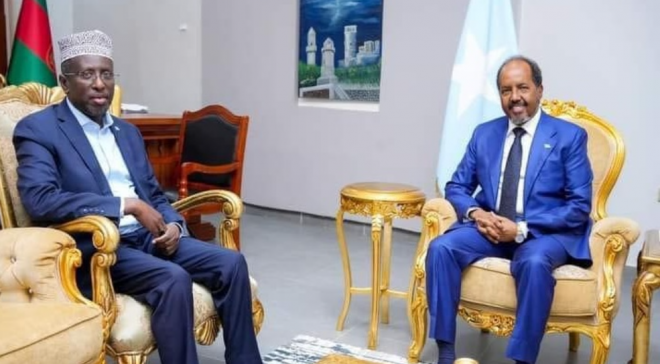
The opposition includes former national leaders who peacefully handed over power to Hassan Sheikh after his electoral victories. They have urged him to engage in genuine dialogue and agree on an electoral framework acceptable to the government, opposition groups and other political actors.
The federal government, meanwhile, is pushing ahead with a one-person, one-vote electoral system, arguing that direct elections would allow citizens to choose their leaders themselves.
Opposition leaders have questioned how the process is being implemented, alleging that elections in the country's regional states are being organised in ways that favour candidates aligned with the Justice and Solidarity Party (JSP), the ruling political bloc. They have cited electoral developments in South West State, Galmudug and Hirshabelle as grounds for their concerns.
The allegations reflect a broader political dispute over the legitimacy of the electoral process, constitutional arrangements and the transfer of power in Somalia. The competing positions have raised concerns about whether political leaders can reach an agreement before the dispute escalates further.
Opposition figures have called on Hassan Sheikh to enter negotiations and work towards an inclusive electoral deal, warning that failure to resolve the dispute could deepen political tensions and threaten stability in the capital, Mogadishu.
The government’s position is that direct elections offer a path towards greater public participation in choosing leaders, while its critics insist that the process must be based on broad political consensus to avoid further divisions.
The dispute remains centred on the electoral framework and the terms under which Somalia’s next political transition should take place.
GAROWE ONLINE