Saudi Arabia issues ultimatum to Iran after strikes on world’s largest LNG hub
-
 Staff Reporter GAROWE ONLINE
- Posted On 19-03-2026, 09:29AM
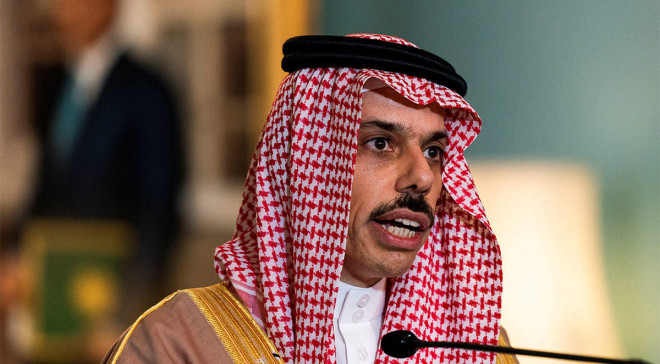
RIYADH, Saudi Arabia — Saudi Arabia’s foreign minister issued a sharp ultimatum to Tehran on Thursday, warning that the kingdom and its Gulf neighbors have "limited" tolerance for continued Iranian attacks and calling on Iran to immediately "recalculate" its regional strategy.
Foreign Minister Prince Faisal bin Farhan Al Saud, speaking at a news conference following a summit of Arab and Islamic leaders, stated that Gulf nations possess "very significant capacities and capabilities" that could be mobilized should they "choose to do so."
The warning follows a wave of sophisticated strikes on Wednesday targeting critical energy infrastructure across the region, including Qatar’s Ras Laffan industrial city and the United Arab Emirates’ Habshan gas facility.
"Iran has carefully planned its strategy for striking regional neighbors, despite denials from Tehran’s diplomats," Prince Faisal said.
In Qatar, the Ministry of Foreign Affairs issued a "strong condemnation" of what it termed a "blatant Iranian attack" on Ras Laffan. Located 50 miles northeast of Doha, the facility is the world’s largest liquefied natural gas (LNG) production hub, accounting for approximately 20% of the global supply. Significant damage was reported at the site.
In the UAE, defense officials reported that air defenses intercepted 13 ballistic missiles and 27 drones. Operations at the Habshan gas facility were suspended after debris from a successful interception caused several "incidents" on-site.
The Iranian Islamic Revolutionary Guard Corps (IRGC) had previously warned of retaliation against Gulf energy sites following an Israeli strike on Iran’s offshore South Pars gasfield on March 18. Iranian state media confirmed that facilities linked to South Pars, located off the coast of Bushehr province, had come under fire earlier this week.
Saudi Arabia’s Ministry of Defense confirmed its air defenses intercepted four ballistic missiles targeting the capital, Riyadh, and two others launched toward the country’s eastern region on Wednesday.
The escalating conflict has sent shockwaves through global energy markets. While analysts initially predicted oil prices could top $100 a barrel following the start of hostilities on February 28, Brent crude has remained above that threshold since March 13. On Wednesday, prices surged past $108 a barrel.
Market watchers are now warning that if the targeting of Gulf LNG and oil infrastructure continues, prices could surpass $150 or even $200 a barrel, threatening a global economic slowdown.
GAROWE ONLINE