Somalia’s Constitutional Crisis: Power Games Over Principles will push Democracy to the Edge
-
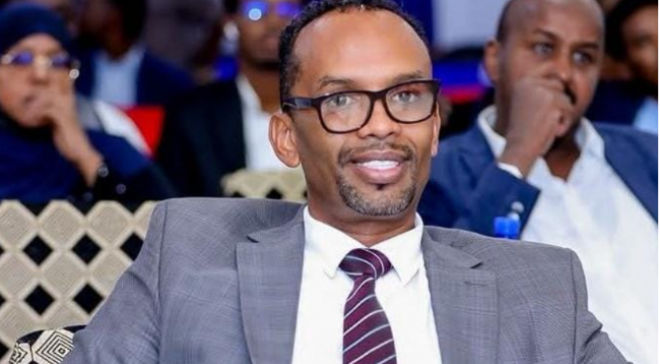
 Abdifatah Abdinur Puntland's State Minister of the Presidency
- Posted On 07-03-2026, 10:55AM
Somalia finds itself at a crossroads. A recent process presented as a constitutional amendment has sparked alarm, raising fundamental questions about the rule of law, democratic norms, and the integrity of federal governance.
The Constitution of the Federal Republic of Somalia is more than a set of rules—it is a social contract binding the country’s diverse clans, regions, and political actors. Altering it is not a casual exercise. It must be done transparently, with broad political consensus, public consultation, and strict adherence to the procedures enshrined in the 2012 Provisional Federal Constitution.
Yet reports from the recent parliamentary session suggest these standards were not met. The required two-thirds majority in both Houses of Parliament—a cornerstone of constitutional legitimacy—was reportedly not achieved. Only 34 members of the Upper House attended, falling short of the 36 needed. Twenty members were absent, many of whom explicitly opposed the process. Votes cast online, contrary to parliamentary rules, further raise doubts about the legality of the proceedings.
These procedural lapses are not mere technicalities. They strike at the heart of Somalia’s federal system, undermining public confidence in institutions meant to represent all citizens. When the rulebook is bent for political expediency, the Constitution risks becoming a tool for narrow interests rather than a unifying framework for the nation.
Concerns extend beyond Parliament. The outgoing President, Hassan Sheikh Mohamud, appears to have taken unilateral steps that blur the line between executive and legislative authority, raising questions about the balance of power central to Somalia’s federal architecture. Alleged interference with the powers of Federal Member States, particularly in organising elections, threatens the autonomy guaranteed under both the Provisional Federal Constitution and the constitutions of the Member States themselves.
Opposition was not limited to absentee parliamentarians. The Federal Member States of Puntland and Jubaland voiced strong objections. Over fifty MPs were reportedly blocked from participating in deliberations. Prominent political figures, including former national leaders, publicly questioned the legitimacy of the process. Such widespread dissent underscores that this amendment lacks the broad-based political consensus essential for durable constitutional change.
Somalia’s fragile federal system cannot afford shortcuts. The country has endured decades of conflict, and its hard-won institutions remain vulnerable. Any constitutional change that bypasses procedural safeguards or marginalises dissent risks deepening political fractures at a time when unity is critical.
International partners monitoring Somalia should take note. A constitution amended under questionable circumstances cannot serve as a foundation for political stability or governance. It cannot provide the legitimacy necessary to guide elections, manage disputes, or foster national cohesion.
Somalia stands at a pivotal moment. Upholding the Constitution is not just a legal obligation—it is a test of the country’s commitment to democracy, federalism, and accountable governance. ShorThe Somalia Federal Government’s current leadership must ask themselves: do they serve the Constitutiont-circuiting this process may achieve immediate political gains, but it imperils the long-term integrity of Somalia’s institutions and the trust of its citizens.
The path forward is clear: full adherence to constitutional procedures, respect for parliamentary rules, inclusive political dialogue, and the protection of federal balance. Anything less risks undermining the very foundation of Somalia’s statehood.
The Somalia Federal Government’s current leadership must ask themselves: do they serve the Constitution, or merely their own ambitions? The answer will shape the nation for generations.
By: Abdifatah Abdinur, the State Minister of the Presidency, Puntland State of Somalia
Gmail: Abdifatah.abdinur@gmail.com