Sudan: Haroun’s Interview Reopens the Record of War Crimes and the “Blood Alliance”
-
 Staff Reporter GAROWE ONLINE
- Posted On 12-11-2026, 01:46PM
Amid severe food insecurity and the near-total collapse of essential services, the war in Sudan continues between the army and the Sudan Founding Alliance Forces (Tasis), leaving tens of thousands of civilians dead and millions more displaced.
As the military option continues to be pursued, former regime affiliates and leaders of the Islamic Movement are escalating their activities, potentially steering the country towards catastrophic developments in the near future, according to observers.
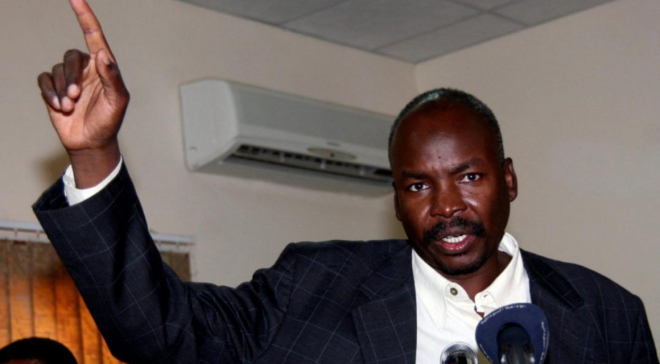
As the war rages on, Ahmed Haroun, head of the dissolved National Congress Party and a fugitive wanted by the International Criminal Court (ICC), has resurfaced, sparking considerable controversy in Sudanese and international circles. Haroun is wanted by the ICC on charges of war crimes and crimes against humanity. He was first arrested in April 2019, following al-Bashir’s removal from the presidency in the wake of mass popular protests.
The ICC has for years been calling for Haroun and al-Bashir to be handed over to the court. Haroun faces 20 counts of crimes against humanity and 22 counts of war crimes over his role in recruiting militias that perpetrated ethnic massacres in Darfur in the early 2000s. In 2024, the United States offered a reward of up to $5 million for information leading to his arrest.
Amid mounting public outrage, the authorities in Port Sudan leaked news of Haroun’s arrest without making any official announcement. The information was disclosed to the media by leaders of the National Congress Party, the Muslim Brotherhood’s former ruling party.
The Islamic Movement’s Staged Performance
Khalid Omar Youssef, an engineer and leading figure in the Sumoud Alliance, questioned the credibility of reports circulating about Ahmed Haroun’s arrest, describing them as “a crude charade that fools no one”. He suggested that the move was an attempt to contain the public anger triggered by Haroun’s latest media appearance.
In a post on his Facebook page, Khalid Omar said that “al-Burhan did not suddenly discover Haroun’s presence in Sudan following the interview”. He pointed out that Haroun had remained in the country since his release from prison after the outbreak of the war, “under al-Burhan’s hearing, watchful eye and protection”, as he put it.
He added that Haroun had been involved in managing the war, according to his account, and that “leaders from his party and his associates occupy influential positions within the institutions of the Port Sudan government and its political and security apparatus”. He argued that talk of Haroun’s arrest was prompted by the uproar surrounding his media appearance, rather than any new discovery about his whereabouts or activities.
According to observers, Haroun’s appearance exposed a pattern of manoeuvres by the Islamic Movement to reposition itself within the corridors of power following its downfall in 2019, capitalising on general mobilisation, the retreat of the civilian political process and the erosion of state institutions to consolidate its influence over military leaders.
Haroun’s appearance on the podcast, during which he proposed an electoral system based on proportional representation rather than geographical constituencies, alongside a new social contract among political forces, also reflected internal divisions over the distribution of influence and the future of the military establishment.
Observers say the alliance between Islamic Movement cadres, led by acting Secretary-General Ali Karti, and al-Burhan has helped legitimise their presence through the “popular resistance” groups. They also accuse these forces of involvement in military operations that have resulted in massacres and widespread destruction in Darfur and Khartoum, while deepening social and ethnic divisions.
This scene brings to mind the political history and past policies of the Muslim Brotherhood regime in Darfur, which resulted in the deaths of approximately 300,000 people and the displacement of millions. These crimes led to the issuance of international arrest warrants against al-Bashir and his associates, foremost among them Ahmed Haroun.
Impunity
Meanwhile, observers say Haroun’s current appearance carries messages suggesting that al-Burhan is protecting war criminals and that the army has legitimised a policy of impunity throughout the war.
In April 2026, two prominent fact-finding missions warned of the continued prevalence of impunity as grave and widespread human rights violations intensified. The warning came in a joint statement issued on Monday by the Independent International Fact-Finding Mission for the Sudan and the African Union’s Joint Fact-Finding Mission on the Human Rights Situation in Sudan.
The joint statement stressed that accountability for the atrocities committed in Sudan is vital to preventing further violations, stating: “Unless perpetrators are held accountable, impunity—which is a key driver of this conflict—will continue to spread and undermine prospects for lasting peace in Sudan and the wider region.”
The two missions renewed their calls on all parties to the conflict, African Union and United Nations member states, and regional and international bodies to establish an independent and complementary judicial mechanism to prosecute those responsible for international crimes in Sudan, in coordination with existing international justice efforts.
United Nations and international reports have documented thousands of horrific violations committed by the Sudanese army and allied militias. Reports by the Office of the United Nations High Commissioner for Human Rights and the Independent Fact-Finding Mission confirm the military establishment’s extensive reliance on air power, drones and heavy artillery in attacks targeting populated residential areas, markets and essential service facilities.
The Al Jazeera Human Rights Observatory revealed serious abuses in a report published in August this year, allegedly committed by the Federal Investigations Department, the Security Cell and Muslim Brotherhood-affiliated militias in the city of Wad Madani and across Al Jazirah State.
The Alliance of Death
Meanwhile, Haroun’s appearance confirms that the alliance between al-Burhan and the Islamic Movement is no longer concealed. More than a year ago, Haroun spoke about the war and its future; he has now returned to discuss Sudan’s fate from areas under army control.
More than two months ago, al-Burhan launched a Sudanese-Sudanese dialogue initiative. However, the proposal received little support in Sudanese circles, while observers linked it to the manoeuvres of the Islamic Movement in Sudan.
Observers stress that a call for dialogue, regardless of how broad its list of participants may be, will not be sufficient on its own to change the equation unless it is accompanied by a process that reduces the impact of the war on the political process.
They also point out that excluding the National Congress Party and the Tasis Alliance, which is linked to the Rapid Support Forces (RSF), constituted an early test of the dialogue’s seriousness and reinforced suspicions that it had been launched in the interests of the Muslim Brotherhood.
Politicians say the prospects for what they describe as a “regime dialogue” appear non-existent even before its launch, given the absence of genuine national consensus, the continuation of the war, and the failure to place a ceasefire and the response to the humanitarian catastrophe at the top of the agenda.
Meetings of anti-war civilian forces held in Addis Ababa on 22–23 August last year had already made clear their rejection of “being part of the window dressing for a dialogue that does not lead to an end to the war”.
Those forces likened the initiative to the “National Dialogue of the Broad-Based Government”, known as the Al-Wathba Dialogue, launched under ousted President Omar al-Bashir in 2014. They described it as nothing more than “peace among those who are present”, entrenching division by failing to invite broad segments of Sudanese society, particularly influential forces on the ground and civilian groups opposed to the war.