Somalia in the Houthis’ Sights: A Potential New Foothold for Regional Operations
-
 Staff Reporter GAROWE ONLINE
- Posted On 10-10-2026, 09:03AM
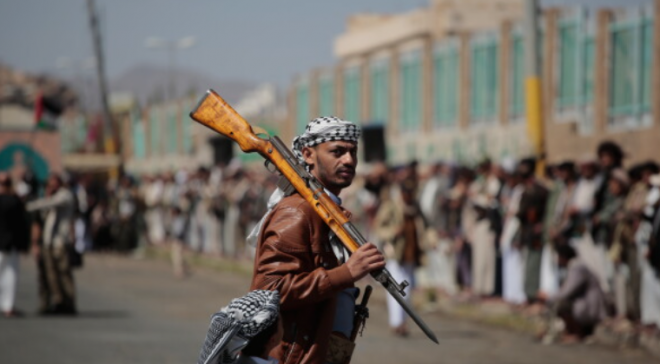
MOGADISHU, Somalia — The U.S. military has raised concerns that Yemen’s Houthi rebels could establish links with al-Shabab in northern Somalia, potentially giving the Somali militant group access to advanced weapons, drone technology and technical expertise.
A U.S. Africa Command official, speaking to media on condition of anonymity, said possible cooperation between the Houthis and al-Shabab could increase the Somali group’s ability to threaten American forces and U.S. interests in the Horn of Africa.
The potential relationship has raised concerns about security around the Gulf of Aden, a strategic waterway connecting the Red Sea and the Indian Ocean that serves as a major route for international commercial shipping.
If the Houthis were to secure logistical support or a foothold in Somalia, they could potentially expand their regional operations and complicate efforts to protect vessels moving through the strategic maritime corridor. However, the extent of any Houthi presence in Somalia and the nature of possible cooperation with al-Shabab remain unclear.
The concerns also extend to Camp Lemonnier in Djibouti, the main U.S. military base in the region and a key hub for American counterterrorism and security operations across East Africa.
Former AFRICOM commander Gen. Michael Langley told Congress last year that the Houthis had the capability to strike U.S. military facilities in Djibouti if they chose to escalate their confrontation with Washington.
The security concerns come as the Pentagon reportedly prepares to relocate some of its MQ-9 Reaper drones from Somalia for operations against drug-trafficking groups in South America.
The New York Times reported this week that an unspecified number of the unmanned aircraft would be transferred to the Western Hemisphere. The report did not provide a precise number of drones involved or a timeline for the relocation.
The MQ-9 Reaper is used for surveillance and precision strikes, including operations against militant groups. The reported redeployment comes after the aircraft suffered significant losses since the war involving Iran began in late February, according to the report.
Any reduction in the number of U.S. drones operating from Somalia could affect surveillance and strike capabilities, although the overall impact would depend on the scale of the withdrawal and the availability of other military assets.
Al-Shabab, which is affiliated with al-Qaida, has waged an insurgency against Somalia’s federal government for years and regularly attacks Somali security forces and international partners. The group remains a major security threat despite sustained military operations against its fighters.
The Houthis, an Iran-aligned movement that controls much of northern Yemen, have carried out attacks against commercial and military shipping in the Red Sea and surrounding waters, drawing international military responses.
Publicly available information has not established the scale of any operational relationship between the Houthis and al-Shabab in Somalia. Claims of a possible presence or cooperation require further verification, and no detailed public evidence has been presented to establish the extent of such links.
The potential convergence of the two groups would raise concerns for regional maritime security and U.S. military operations, but the precise nature of the reported threat remains uncertain.
GAROWE ONLINE