Ports, Minerals and Military Bases: The Strategic Price of Turkish Support in Sudan
-
 Staff Reporter GAROWE ONLINE
- Posted On 14-11-2026, 09:24AM
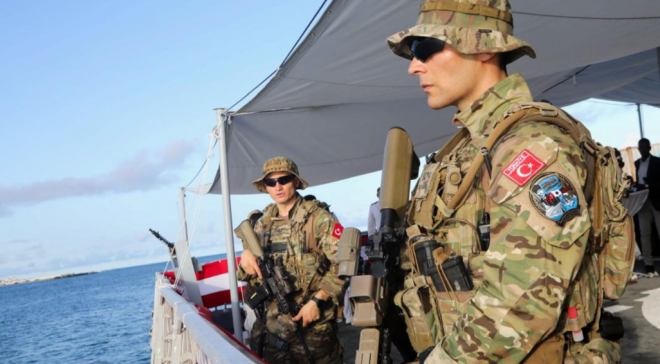
Turkish support for the Port Sudan authorities goes beyond supplying their forces with weapons and military equipment. It extends to building a network of strategic and economic interests tied to the future of Sudan's coastline and its natural resources. At a time when efforts to end the war, which has been raging since April 2023, remain stalled, the partnership between Ankara and the military leadership under Abdel Fattah al-Burhan is expanding, providing the army-led authorities with additional resources and capabilities while deepening the extent to which their military future is tied to the interests of foreign powers.
The impact of this support is not confined to the balance of fighting on the ground; it also extends to the calculations surrounding a political settlement. Military supplies and economic concessions give the Port Sudan authorities greater room to continue the war rather than engage in a process that would end the conflict and pave the way for a democratic civilian transition.
Turkish Moves Extend Beyond Military Cooperation
Between 2 and 5 November, a delegation from the Turkish Naval Forces Command and the General Directorate of Shipyards visited Port Sudan Naval Base to inspect maintenance and repair facilities and ship-lifting docks, and discuss ways to strengthen the Sudanese Navy's shipbuilding and maintenance capabilities.
The Turkish Ministry of National Defence announced that the delegation met with Sudanese Naval Forces Commander Mahgoub Bushra Ahmed Al-Rahman. The visit reflects the expansion of military cooperation between Ankara and the Port Sudan authorities and its transition from aerial armaments to the development of maritime infrastructure.
The move comes at a time when Sudan's coastline is assuming growing importance in the calculations of regional and international powers, given its location on the Red Sea and the military, logistical and commercial opportunities it offers.
In this context, Italy's Nova news agency reported on 11 November, citing Sudanese sources, that closer defence ties between Saudi Arabia and Türkiye could pave the way for the establishment of a Turkish naval base on the Sudanese coast. It noted that Riyadh would not oppose such a move in light of the countries' new defence relations.
The agency linked these developments to the Mecca Defence Agreement signed by Saudi Arabia, Türkiye and Pakistan on 7 August 2026, which strengthens defence cooperation among the three countries. This rapprochement provides Ankara and Riyadh with a broader framework for coordinating their security interests in the region, while Sudan remains one of the strategic locations featuring in calculations of influence over the Red Sea.
Russia Enters the Maritime Equation
In parallel with Türkiye's moves, Al-Burhan's visit to Moscow on 28 and 29 October reopened the issue of Russia's presence on the Sudanese coast.
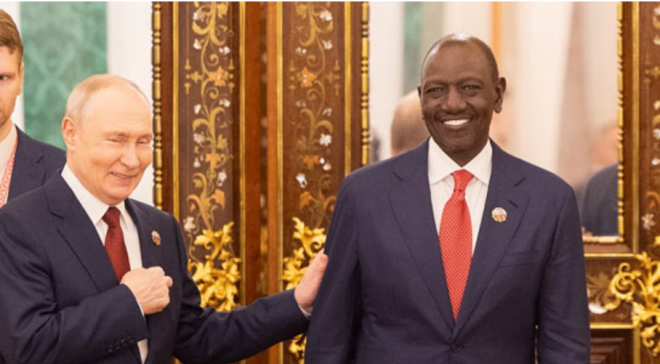
During his meeting with Russian President Vladimir Putin, Al-Burhan proposed establishing a Russian free economic zone on the Red Sea coast, including facilities for storing fuel and wheat, alongside cooperation in railway development and freight transportation.
According to a report published by Sudan Tribune on 30 October, Al-Burhan also offered Russian companies access to sites for exploring gold, copper and other minerals. On 3 November, the newspaper revealed a Sudanese proposal to establish a free economic zone during closed-door talks between the two sides, as a framework that would provide Moscow with a logistical foothold on the Red Sea amid negotiations over a naval support facility and a Russian military base.
These arrangements reveal the Port Sudan authorities' efforts to leverage the country's geographical position and natural resources to build partnerships with foreign powers in exchange for political, military and economic support. They also place the Sudanese coastline at the centre of growing competition among Ankara, Moscow and Riyadh, as military interests become increasingly intertwined with long-term investments and concessions.
Weapons in Exchange for Ports and Natural Resources
Documents obtained by The Washington Post for its investigation published in March 2025 reveal another dimension of the relationship between Ankara and the Port Sudan authorities: the economic returns proposed to Turkish companies following arms deals.
According to internal documents from Baykar, company officials discussed with representatives of the Port Sudan authorities the possibility of granting Turkish companies rights to develop and manage Abu Amama Port on the Red Sea, alongside investment opportunities in copper, gold and silver mines, as well as fishing and fish-processing licences.
The investigation cited an internal company document stating that Sudanese officials had expressed their willingness to grant Turkish companies the rights to construct and manage the port, or alternatively make the project available to Russian entities. The discussions also included investment opportunities in mineral resources and the granting of fishing and processing licences.
These details are significant because they reveal the intersection of military and economic interests in the relationship between the two sides. Arms deals are no longer separate from the future of Sudan's ports and natural resources; rather, they have become part of a broader network of understandings that offers Turkish companies strategic opportunities in a country engulfed by war and institutional collapse.
The investigation also revealed that Turkish arms shipments reached Sudan through complex air routes, including flights that passed through Mali's capital, Bamako, and were operated by the Russian airline Aviakon Zitotrans, which was sanctioned by the United States in 2023. These routes expose cross-border transportation networks that helped deliver military equipment to the Port Sudan authorities during the war.
Foreign Support and Stalled Negotiations
The expansion of military cooperation coincides with hardline positions announced by Al-Burhan regarding an end to the war. On 6 October, the army chief ruled out negotiations with the Rapid Support Forces (RSF) and vowed to continue military operations until the areas under their control were retaken.
This position places a major obstacle in the path of a political settlement, particularly as the continued flow of external support gives the warring parties the capacity to sustain operations and bet on shifting the balance of power on the battlefield.
On 23 September, US Secretary of State Marco Rubio warned of the role played by foreign interventions in prolonging the war, saying that the conflict "would not have happened without the active participation of outside actors fuelling one side of the conflict or the other".
He added that progress towards a lasting peace agreement, or even the opening of humanitarian corridors, stalls whenever either side believes it can achieve military gains. He stressed that external actors must use their influence and exert pressure on their allies to honour their commitments.
These warnings reflect the reality of the war in Sudan, where the continued flow of military supplies reduces incentives for negotiations and gives military leaders reason to believe that the conflict can be settled by force, even as the humanitarian catastrophe deepens and the number of displaced people and those in need of assistance continues to rise.
Defence Agreements and Interests Beyond Sudan
The Mecca agreement signed by Saudi Arabia, Türkiye and Pakistan last August further underscores the significance of the defence rapprochement among these countries, at a time when military activity in the Red Sea is expanding. However, the relationship between the trilateral agreement and a potential military presence in Sudan is reflected in the convergence of interests and activities, not in Sudan being a party to the agreement.
As for reports of Saudi financing for Pakistani arms deals with the Port Sudan authorities, these require clarification. Reuters revealed on 20 April 2026 that Pakistan had placed a $1.5 billion arms and aircraft deal with Sudan on hold following a Saudi request to terminate it, with Riyadh announcing that it would not finance the agreement. Accordingly, the deal cannot be presented as Saudi-backed military assistance actually delivered to arm the Sudanese army.
This, however, does not diminish the significance of Saudi-Turkish defence rapprochement or the moves associated with expanding maritime cooperation along the Sudanese coast, particularly as Al-Burhan offers Moscow economic and mineral concessions and Baykar documents reveal investment opportunities for Turkish companies in ports and natural resources.
The contours of the relationship between military support and economic interests in Sudan are becoming clear through three concurrent tracks: arming the Port Sudan authorities and strengthening their combat capabilities; opening the door for foreign companies to invest in ports and minerals; and expanding maritime cooperation with regional and international powers.
With Al-Burhan refusing to negotiate with the Rapid Support Forces and military operations continuing, these partnerships are becoming factors that provide the army-led authorities with additional resources to sustain the war, while foreign powers compete for opportunities to expand their influence and investments in a country exhausted by conflict.