From the Battlefields to the Classrooms — Al-Baraa bin Malik Brigade’s Next-Generation Strategy
-
 Staff Reporter GAROWE ONLINE
- Posted On 04-11-2026, 05:59AM
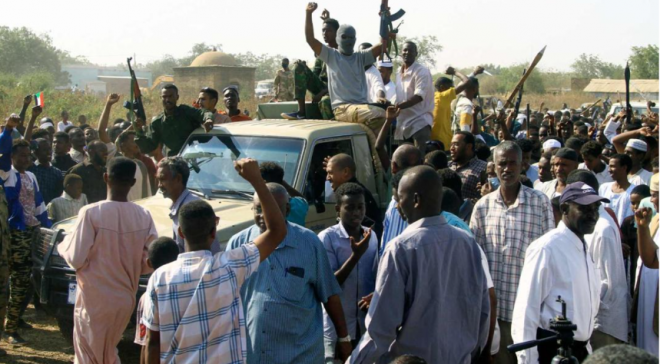
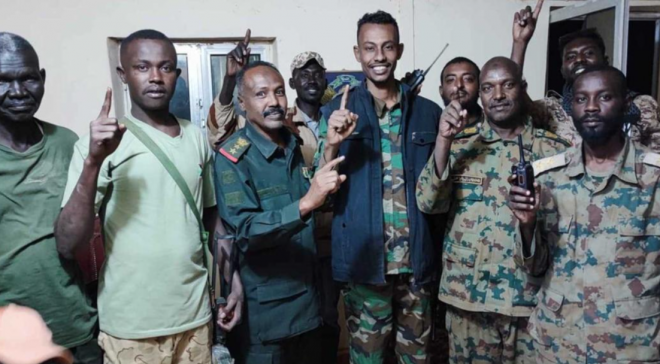
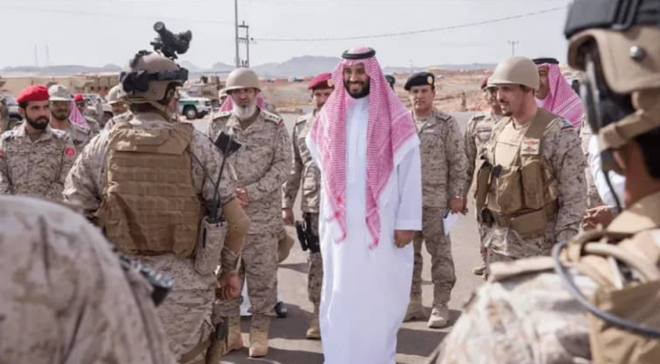
Information attributed to a Sudanese military source, who requested anonymity, has revealed that a Saudi request to deploy groups from the Al-Baraa bin Malik Brigade to Yemen to participate in fighting against the Houthis was rejected.
Discussion of the proposed deployment of these formations has once again drawn attention to the Islamist brigade fighting alongside the Sudanese army and its record inside the country, particularly the allegations examined in this report concerning violations inside schools and the conversion of educational facilities into military deployment sites, as well as the implications for students' safety and their right to education.
While the international community focuses its attention on the atrocities committed by the Al-Baraa bin Malik Brigade on Sudan's bloody battlefields, a longer-term and quieter strategy is unfolding within school walls.
This militia, which Washington has designated as a terrorist organisation, is not limiting its efforts to fighting the Rapid Support Forces. Rather, it is systematically targeting children and young people. Its objective is not merely to win today's war, but to ensure that the Islamist movement retains a generation in Sudan that is loyal to and indoctrinated with its ideology long after the war ends.
In July 2026, the Sudanese Teachers' Association documented a disturbing scene that sent warning signals to the international community: a commander from the Al-Baraa bin Malik Brigade standing before students in a classroom, delivering a speech filled with language of revenge and threats.
According to the association's statement, the incident was not isolated but directly linked to public threats made by Abu Karam, the former Director of Education in Gezira State, who warned teachers that if they went on strike to demand their legal rights, they would be replaced by members of the Al-Baraa bin Malik Brigade and the Sudan Shield Forces.
The Sudanese National Human Rights Observatory goes further, asserting that the brigade continues to forcibly recruit children from schools and transfer them to military training camps in the Green Zone in Khartoum. The organisation says it has obtained new visual evidence supporting this allegation, noting that such actions constitute a flagrant violation of international humanitarian law and the Convention on the Rights of the Child.
Experts who spoke to Arab and international media outlets have provided significant insights into the deeper dimensions of this strategy. The objective of these practices is not necessarily to recruit children for immediate combat, but rather to mobilise them through slogans and ideological messaging in preparation for the next phase.
Hatem Elias, a member of the judicial body of the Sudanese Alliance for Justice, adds that the presence of the Al-Baraa bin Malik Brigade in schools is nothing new. Rather, it represents a continuation of the approach adopted by the Islamist movement since Bashir came to power, when educational institutions and the minds of young people became its primary environment for disseminating its ideology.
This assessment places the current phenomenon within a much longer historical context. Under Bashir, the Islamist regime made the education system a central mechanism for reproducing its ideology. Following the regime's ouster in 2019, this mechanism was never fully dismantled. The war created favourable conditions for its reactivation: teachers' strikes created a vacuum, the militias filled it, and children became the target.
The consequences of infiltrating schools are not limited to the short term, through the removal of children from education and the disruption of learning. They also extend to creating a structural obstacle to the peace process.
Analyses by The National Interest magazine indicate that the ideological indoctrination practised by Islamist militias "complicates the peace process because Islamists do not want to end the war unless they can return to power."
This means that even if al-Burhan and the Rapid Support Forces reach some form of ceasefire arrangement, the network that has succeeded in drawing the next generation into its ideological orbit, while maintaining a deep presence within the army and security agencies, will remain capable of undermining any peace plan it does not accept.
What is being invested in schools today is, in effect, a long-term reserve of this capacity to obstruct peace.
The presence of the Al-Baraa bin Malik Brigade in Sudanese classrooms should not be viewed as merely a temporary by-product of the chaos of war. It is a carefully planned strategy: controlling the educational sphere to ensure the continuity of the ideology, engaging with children to secure a future supply of recruits, and filling the vacuum left by the retreating state to guarantee a presence that cannot be ignored in any post-war political order.
If the international community continues to focus solely on allocating seats at the ceasefire negotiating table while overlooking this silent battle unfolding inside classrooms, it will never fully understand why peace in Sudan remains so difficult to achieve.