OP-ED | Ethiopia’s National Dialogue through the Lens of Medemer: A New Horizon of Hope for Consensus and Reconciliation
-
 Yohannes Gashama An Ethiopian Diplomat serving at the Ethiopian Consulate Office in Puntland State of Somalia
- Posted On 15-08-2026, 06:54AM
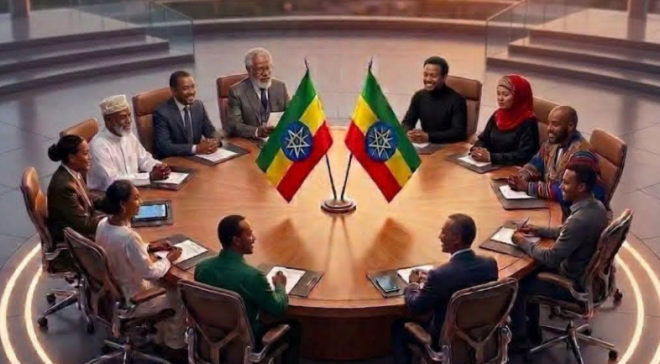
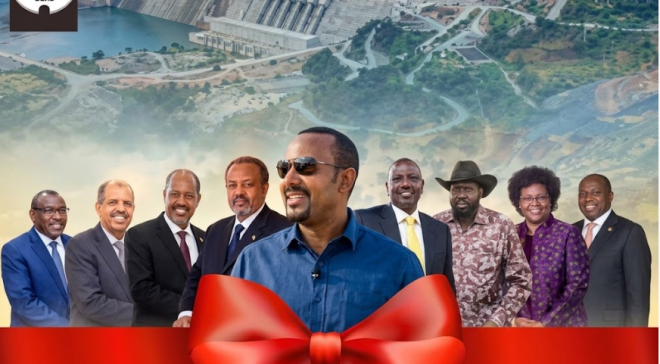
Ethiopians have a rich history of civilization and statehood, a long tradition of maintaining sovereignty and independence, and a strong belief in the principles of cooperation and collective security. Ethiopians have united to resist colonial rule and to undertake major national projects such as the Grand Ethiopian Renaissance Dam (GERD). However, Ethiopia has not historically witnessed a nationwide gathering around the table to address the political disagreements and social divisions that have challenged its unity and national consensus. Today, Ethiopians are carrying forward their legacy of victories on the battlefield of Adwa and achievements in constructing mega-projects by coming together around the table for dialogue under the roof of the Addis Ababa Convention Hall.
At the same time, Ethiopia has had limited experience with formal, inclusive, and nationwide mechanisms for resolving political differences through dialogue. Governance was historically centralized, social inequalities persisted, and political differences were often addressed through force. Many political parties and fronts were established outside Ethiopia along separate identity-based lines, largely seeking to address the grievances of their respective ethnic groups rather than pursuing an inclusive national framework. Historically, political voice, rights, and privileges were largely concentrated among a limited number of groups, while the broader public had limited opportunities to participate in national decision-making and nation-building.
Moreover, Ethiopia has not yet had a constitution developed through broad national consensus among its diverse communities, making this one of the key reasons why a National Dialogue is necessary.
Following the successful completion of the Seventh National General Election, Ethiopia called upon its citizens to engage in dialogue on the country’s future and direction.
Every great nation has stories of how it has navigated civil wars, political disagreements, social divisions, and external challenges. Nations are often tested by problems such as competing historical narratives, deep political and social divisions, and the absence of national consensus
This is particularly important for a country like Ethiopia, home to more than 80 nations, nationalities, and peoples with diverse identities, where national consensus, mutual understanding, and social cohesion are essential. Over the years, these differences have continued to pose challenges to the country’s national unity and solidarity.
The National Dialogue process has been under preparation for the past four years. It is structured around eight major agenda items, to be discussed over one month. The process follows three phases, and it has now completed the first two phases—Divergence, where differing views and grievances were openly expressed, and Convergence, where common ground was explored and differences narrowed—and has entered the Consensus phase, focused on reaching mutually acceptable and agreed solutions.
Its main objectives are to address those long-standing political and social disagreements, build national consensus, promote national reconciliation, and develop constitutional solutions to major national challenges. The process is grounded in the principles of inclusivity, freedom from undue pressure, and putting Ethiopia at the center.
At its official launch, Prime Minister Abiy Ahmed emphasized that dialogue should be pursued for the sake of the country, stating that it is better to engage in dialogue for twenty years than to fight for two years. More broadly, war should only be considered legitimate when necessary to defend the country’s sovereignty, territorial integrity, and national interests.
One of the defining qualities of the current Ethiopian government, guided by the philosophy of Medemer, is its recognition of the country’s long-standing political and social divisions. Equally important is its recognition that these differences are shared national challenges requiring inclusive, peaceful, and sustainable solutions.
Medemer, as a philosophy of unity and inclusion, emphasizes coming together, cooperation, and synergy. It promotes the idea that Ethiopia’s differences can coexist within a common national framework. In this regard, Medemer provides a philosophical foundation for addressing the country’s political and social differences through inclusion and cooperation rather than division.
The Ethiopian National Dialogue seeks to bring together different groups, political actors, and communities to openly discuss disagreements, address grievances, and identify areas of common understanding and possible solutions.
One of the central principles associated with Medemer is the movement away from a winner-takes-all approach to politics toward cooperation and shared responsibility. The National Dialogue reflects this principle by providing a platform where competing views can be expressed, historical grievances can be discussed, and possible solutions can be negotiated peacefully. In this sense, it represents a shift from confrontation to dialogue.
Medemer also emphasizes reconciliation, forgiveness, and rebuilding trust among Ethiopians. From this perspective, Medemer provides a philosophical foundation for reconciliation, while the National Dialogue provides a structured platform through which reconciliation and national healing can be pursued.
Another important principle is harmonizing diversity with national unity. Medemer emphasizes that Ethiopia’s future depends on bringing together the contributions of its diverse peoples rather than allowing differences to weaken the country. This is closely connected to the National Dialogue’s objective of building consensus around issues of national importance.
Overall, Medemer can be understood as providing the philosophical foundation of unity, inclusion, reconciliation, cooperation, and shared responsibility, while the National Dialogue provides a structured mechanism for translating these principles into practice through dialogue, consensus-building, reconciliation, and national healing.
The principle of shared national objectives is also reflected in the National Dialogue. By creating a platform for different groups to discuss national challenges and identify areas of agreement, the process seeks to contribute to a more stable political and social environment in which Ethiopians can pursue common national interests.
The importance of national dialogue can be understood through lessons from human society, engineering, national experiences, and nature.
Every skyscraper stands on a strong foundation buried deep beneath the ground. Though invisible, it carries the weight of the entire structure and gives the building strength and stability. Likewise, national dialogue provides the unseen foundation for lasting peace, national unity, and state-building. That is why Ethiopians are gathered under one roof—to leave their differences behind through dialogue and build a strong foundation for the country’s future.
The human body is composed of different organs. None can replace or dominate the others by endangering the other body organs. In the same way, a nation prospers when its diverse communities recognize their interdependence and work together for the common good.
Bamboo survives strong winds because it bends rather than breaks. Flexibility and the willingness to compromise are signs of resilience, not weakness. National dialogue also requires the spirit of adaptability and mutual accommodation based on the logic of reality and common sense.
The experiences of nations also demonstrate the value of dialogue. Countries that have emerged from periods of deep division have done so by choosing dialogue, reconciliation, and national consensus over continued conflict. Their experience shows that dialogue is an indispensable instrument for healing divisions, rebuilding trust, and strengthening national institutions
These lessons share a common message; enduring nations are not built by eliminating differences but by transforming them into a shared foundation for unity, stability, and sustainable development. National dialogue provides the platform through which diversity becomes a source of collective strength and national consensus.
In conclusion, so far, despite coordinated false propaganda by Ethiopia’s adversaries, participants in the National Dialogue Conference have reached broad agreement on most agenda items. It is hoped that they will build on this progress and ultimately reach consensus on the remaining issues.
By Yohannes Gashama, an Ethiopian Diplomat serving at the Ethiopian Consulate Office in Puntland State of Somalia.
DISCLAIMER: The views expressed in this article are the author's own and do not necessarily reflect Garowe Online's editorial stance