Somalia Says Ankara Declaration Governs Ties With Ethiopia, Somaliland Deal No Longer Relevant
-
 Staff Reporter GAROWE ONLINE
- Posted On 02-09-2026, 05:32AM
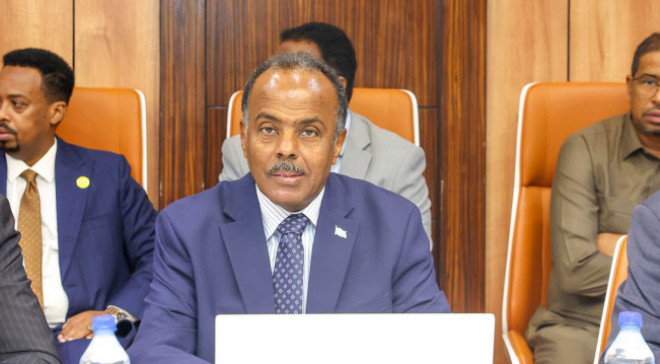
MOGADISHU, Somalia — Somalia's relations with Ethiopia are now governed by the Ankara Declaration signed in 2024, a senior Somali diplomat said, arguing that a disputed memorandum of understanding between Ethiopia and Somaliland no longer carries significance.
State Minister for Foreign Affairs and International Cooperation Ali Mohamed Omar, widely known as Ali Balcad, made the remarks in an interview with Saudi newspaper Asharq Al-Awsat, as Mogadishu and Addis Ababa seek to rebuild relations strained by Ethiopia's maritime agreement with Somaliland.
Omar said the Ankara Declaration reaffirmed the two countries' commitment to respecting each other's sovereignty, unity and territorial integrity.
"The Ankara Declaration is now the framework governing relations between Somalia and Ethiopia," he said.
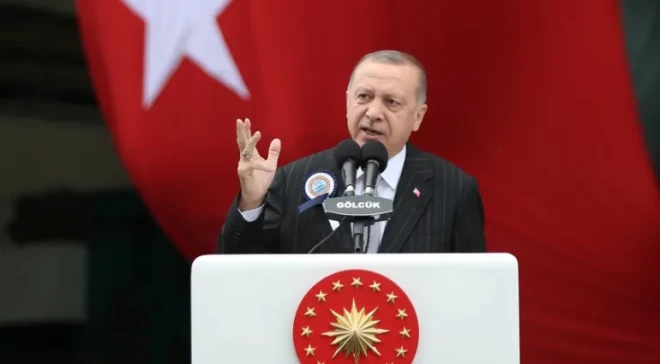
The agreement, brokered by Turkey in December 2024, helped ease tensions after Ethiopia signed a memorandum of understanding with Somaliland earlier that year seeking access to the Red Sea through the Somali region.
Somalia strongly opposed the deal, arguing that Somaliland remains part of its sovereign territory and that any agreement granting Ethiopia access to the sea must be negotiated with the federal government in Mogadishu.
Omar said Ethiopia could obtain reliable access to the sea through Somalia, but any arrangement would have to be based on mutually beneficial commercial agreements and respect Somalia's sovereignty.
"We then began technical negotiations between Ethiopia and Somalia, mediated by Turkey," Omar said, referring to talks launched under the Ankara framework.
He said the discussions had demonstrated that Ethiopia's need for reliable commercial maritime access could be addressed through a legal arrangement without compromising Somalia's sovereignty.
According to Omar, the negotiations showed that Addis Ababa's maritime interests could be accommodated through commercial and diplomatic channels rather than agreements that Somalia considers detrimental to its territorial integrity.
The Somali official also played down continued debate over the status of the Ethiopia-Somaliland memorandum of understanding, saying Mogadishu did not consider it important to spend significant time discussing whether the agreement had been suspended, abandoned or was still active.
Instead, he said, the Ankara Declaration and the subsequent technical negotiations represented the current framework for addressing Ethiopia's demand for maritime access.
The comments reflect Mogadishu's continued effort to ensure that any Ethiopian access to the sea is negotiated directly with Somalia's federal government.
Ethiopia, one of the world's largest landlocked countries, has repeatedly stressed the strategic and economic importance of securing dependable access to maritime trade routes.
The issue became a major source of regional tension in January 2024, when Addis Ababa signed the memorandum with Somaliland. Under the agreement announced at the time, Ethiopia was expected to gain access to a stretch of coastline for commercial and military purposes, while Somaliland said the arrangement would pave the way for broader cooperation.
Somalia condemned the memorandum as a violation of its sovereignty and territorial integrity and sought diplomatic support from regional and international partners.
The Ankara Declaration subsequently provided a framework for dialogue between Mogadishu and Addis Ababa, with Turkey playing a central mediation role.
Omar's latest remarks suggest that Mogadishu views the Ankara process as having effectively superseded the disputed Ethiopia-Somaliland memorandum.
For Somalia, the key issue remains ensuring that Ethiopia's maritime access is achieved through an agreement involving the federal government and does not create a precedent that could undermine Somalia's territorial sovereignty.
The dispute also remains politically sensitive because Somaliland, which declared independence from Somalia in 1991 but has not secured broad international recognition, maintains that it has the authority to enter agreements concerning its territory.
Somalia, however, continues to reject Somaliland's claims to sovereignty and insists that foreign states must deal with Mogadishu on matters involving Somali territory.
GAROWE ONLINE